

New Commercial Solar Projects Must Be Completed by Dec. 31, 2027. Here’s Everything That Matters

By Adam Glick, Solar Sherpa, NATiVE Solar

OK. If your commercial solar project didn’t break ground by July 4, 2026, you’ve now got a deadline with real teeth. To qualify for the federal Clean Electricity Investment Credit (Section 48E), the system has to be placed in service by December 31, 2027. That’s roughly 13 months away. And here’s the part nobody loves hearing: a chunk of that timeline isn’t in your hands. (Or ours, honestly.)
So What’s the Rule, Exactly?
The 2025 federal budget law split solar projects into two groups. If you began construction by July 4, 2026, you got a longer runway. Everybody else has to be placed in service by the end of 2027 to qualify.
There’s no partial credit for “almost.” A system that’s 95% built on New Year’s Eve 2027 is, as far as the tax code is concerned, a system that doesn’t qualify. Harsh? Sure. But that’s how the law reads and we think it’s probably wise to use the conservative interpretation here, folks.
We covered the July 4 cutoff earlier this year in our post on the July 4, 2026 ITC deadline. Here we’re giving a bit of an update to include the absolute deadline for projects that missed the July 4 ’26 starting date.
Wait, What Counts as “Placed in Service”?
Good question, and the answer is messier than you’d hope. The IRS doesn’t publish a solar-specific checklist. The long-standing standard is that property is placed in service when it’s ready and available for its intended use. For a grid-tied array, most folks read that as installed, inspected, interconnected and making power.
That’s why a lot of solar finance people treat utility Permission to Operate (PTO) as the real finish line. If you can’t legally flip the system on, it’s pretty hard to argue it’s “ready and available.”
Now, some tax attorneys may tell you it’s not quite that simple. In at least one private letter ruling, the IRS accepted that a solar project was placed in service while it ran on a temporary grid connection, before the utility finished the permanent tie-in. Interesting! But private letter rulings only apply to the taxpayer who asked for them. And nobody wants their credit riding on an argument with the IRS. We’re guessing most project teams probably won’t want to take the gamble.
Our take: Plan to have PTO in hand well before the deadline, with some cushion.
Where Do Schedules Actually Slip?
Building the array is usually the predictable part. Here’s where things tend to go sideways:
- Interconnection review. Every utility runs its own application, study and approval process. In Oncor and CenterPoint territory you’re dealing with the transmission and distribution utility (TDU), plus your retail electric provider for export and billing. Austin Energy and CPS Energy are city-owned and do things their own way. And bigger systems can trigger extra studies.
- Permitting and inspection. City and county timelines are all over the map in Texas, and inspection calendars get tight at year-end. We’re guessing Q4 2027 is going to get particularly busy at the permitting office, so take heed here, folks!!
- Equipment. Lead times on transformers, switchgear and inverters bounce around, and tariff changes can shift what’s available and what it costs. We dug into the latest round of import policy changes in a recent blog article here about the new Section 232 Solar Tariffs.
- Everyone else’s deadline. Here’s the kicker. That same December 31, 2027 date applies to every commercial solar project in the country that missed the July cutoff. As loudly noted above in red – DON’T LET YOUR PROJECT GET BOGGED DOWN IN THE LAST-MINUTE RUSH FOR FINAL INSPECTIONS.
Working Backward from December 31, 2027
If you’re early in the process, here’s roughly what a backward plan looks like. Every site, utility and system size is a little different, so treat this as a starting point, not gospel.
*The following is a general guideline for commercial solar projects up to about 500 kW. Larger arrays may need a slightly different approach for hitting the PTO (permission to operate) threshold by Dec 31 2027.
| Target | Milestone | Why it matters |
|---|---|---|
| Now through Q1 2027 | Design, structural review, financing settled | Everything downstream waits on these |
| Early to mid 2027 | Interconnection application submitted; major equipment locked | Keeps utility studies and lead times off the critical path |
| Summer 2027 | Construction and inspections | Leaves room for a failed inspection or rework |
| Early fall 2027 | Utility PTO in hand | Margin for meter delays and the year-end rush |
| Dec. 31, 2027 | Placed-in-service deadline | No partial credit after this date |
One more on equipment: make sure it meets any sourcing rules your tax advisor flags, including the 2025 law’s foreign entity of concern (FEOC) restrictions. Not the fun part of the project, but it matters.
What About Battery Storage?
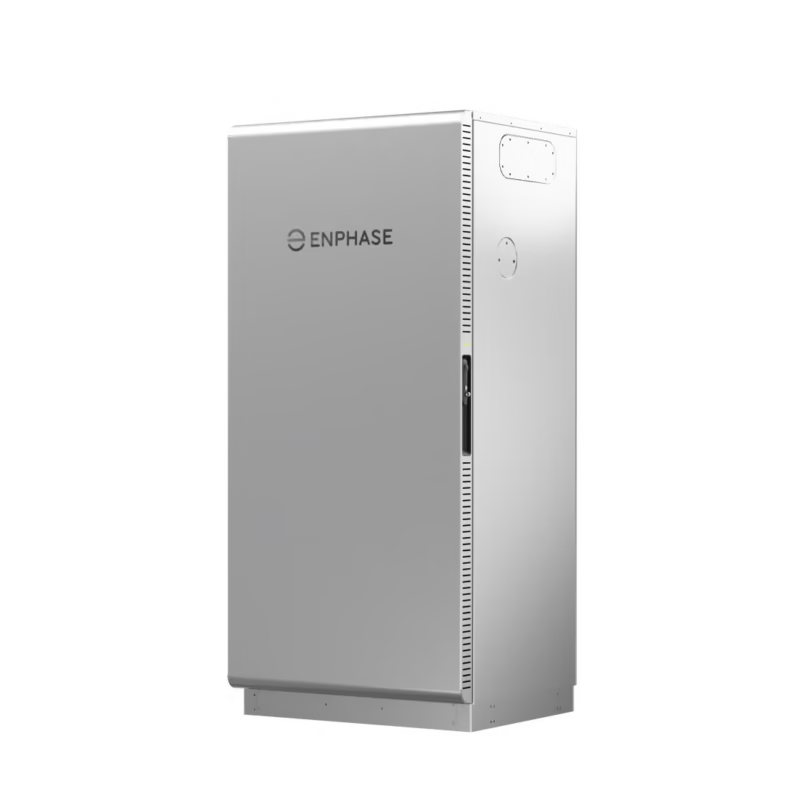
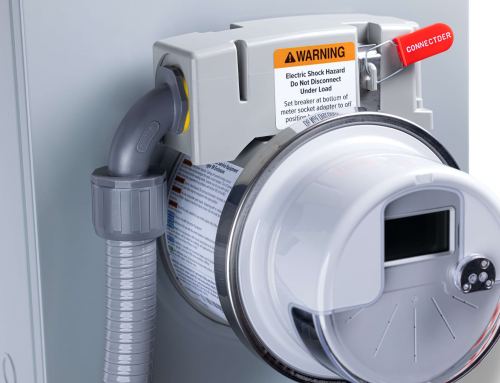
Enphase C80 (image courtesy of Enphase)

ELM Microgrid CMG125 (image courtesy ELM)
Good news here. Battery energy storage systems (BESS) run on a different clock. Under current law, storage stays eligible for the 48E credit at the full rate through 2033 and phases down after that, subject to the FEOC sourcing rules. It isn’t stuck with the end-of-2027 solar cutoff.
So if storage is part of your plan, it doesn’t have to race the same deadline as the solar. That said, there can be good engineering reasons to build them together. More on our commercial battery energy storage page.
How We’re Handling It
We’ve been interconnecting systems with Texas utilities since 2007, and if there’s one thing we’ve learned, it’s that schedules usually get lost in the paperwork, not on the roof. So for projects aimed at the 2027 deadline, we’re building schedules around PTO instead of mechanical completion. We also flag the utility-dependent steps up front, so owners can see where the risk actually sits.
Quick reminder: none of this is tax advice. Eligibility depends on your project, your tax situation and how the rules get applied, so loop in your CPA or tax counsel early. If you want to talk through whether a 2027 timeline is realistic for your facility, let’s talk.















Leave A Comment