


 Texas Water Scarcity and Solar Power: What 2026 Makes Urgent
By Adam Glick, Solar Sherpa, NATiVE Solar
As this past week’s rain has nicely topped the little pond on my property, it (ironically) reminded me of something I’ve been thinking about more and more: Texas is apparently running out of fresh water faster than most people realize. The more one digs in to this topic, the dire implications become clear. The combination of declining supplies, population growth, infrastructure failures, and industrial demand is sucking down fresh water much more quickly than nature can overcome by itself.
Wars have been fought over access to fresh water. But I’m not going to go there for this blog entry. We also aren’t going to delve into the politics of water scarcity in Texas. It’s a whole other thing… Maybe i’ll write about this in future articles, but for now i’ll let you, dear reader, do the research if you’re interested.
Here, we wanted to look at this issue from the solar angle -and talk a little bit about the increasingly solar-related tools that could help to slow the alarming trend of water scarcity here in our beloved state.
Lake Corpus Christi is currently sitting at just over 16% of capacity. Choke Canyon Reservoir is below 8%. Medina Lake fell to 2.5% during the 2025 drought. The Edwards Aquifer -which supplies drinking water for roughly 2.5 million Texans (including this human)- hit historic in 2025, triggering Stage 5 (the most severe) water restrictions in San Antonio and surrounding areas. These are symptoms of a kind of structural mismatch between water supply and demand that Texas has quite apparently been slow to address.
According to the Texas Tribune, if a severe drought were to occur in 2030, the state could face a shortfall of 4.7 million acre-feet of fresh water -more than 20% of projected demand. The Texas 2036 initiative estimates that without a diversified supply strategy, the economic impact of prolonged drought could reach $160 billion annually by 2030. And groundwater, which currently accounts for 54% of Texas’s total water supply, is projected to decline 32% by 2070.
Solar power won’t solve this alone. But it’s increasingly central to the technologies that can. So here we go…
The Water-Energy Problem Is Circular
Here’s the part most people don’t connect: water and energy are deeply interdependent. Conventional power generation -coal, natural gas, nuclear- requires enormous volumes of water for cooling. Meanwhile, moving, treating, and distributing water consumes significant electricity. The two systems stress each other. Yes, some of the water used for power generation is “reclaimed” – but not all. And merely reclaiming the water for other uses doesn’t address the supply issue -it doesn’t replenish water at the source.
Solar photovoltaic generation breaks that cycle. It produces electricity without water consumption. As Texas adds more solar to its grid (Texas is on track to generate more electricity from solar than coal in 2026 for the first time_) the grid’s overall water use intensity decreases. That’s a real, if indirect, contribution to water conservation.
But solar’s direct role in addressing scarcity is growing too.
Solar Desalination: Viable and Scaling
Texas sits atop enormous brackish groundwater reserves -this is water that’s too salty to drink or irrigate with without treatment. Desalination has long been the obvious answer. The problem is that traditional desalination is energy-intensive and expensive to run on grid power, especially when that grid power comes from fossil fuels.
Solar-powered desalination changes the economics. Two primary emergent technologies are relevant here:
Photovoltaic-powered reverse osmosis (PV-RO): Solar panels generate electricity that drives reverse osmosis membranes. The systems can be scaled from small community installations to utility-scale operations. Research published recently identified areas such as West Texas as a particularly strong candidate for this approach -the combination of abundant sunlight, shallow brackish aquifers, and limited freshwater supply makes it a natural fit. AI-enhanced optimization and new materials science further strengthens the viability of the approach here.
Solar-thermal distillation: Concentrated sunlight generates heat that drives evaporation-based desalination. This approach is more energy-efficient in high-solar-radiation environments and produces no carbon emissions in operation. Both commercial and academic inertia in this direction haven’t slowed much in 2026.
Neither technology is purely experimental at this point. Texas already operates desalination capacity at several municipal facilities -the economics are largely being worked out. Now the question is scale and speed of deployment.
Floating Solar on Texas Reservoirs
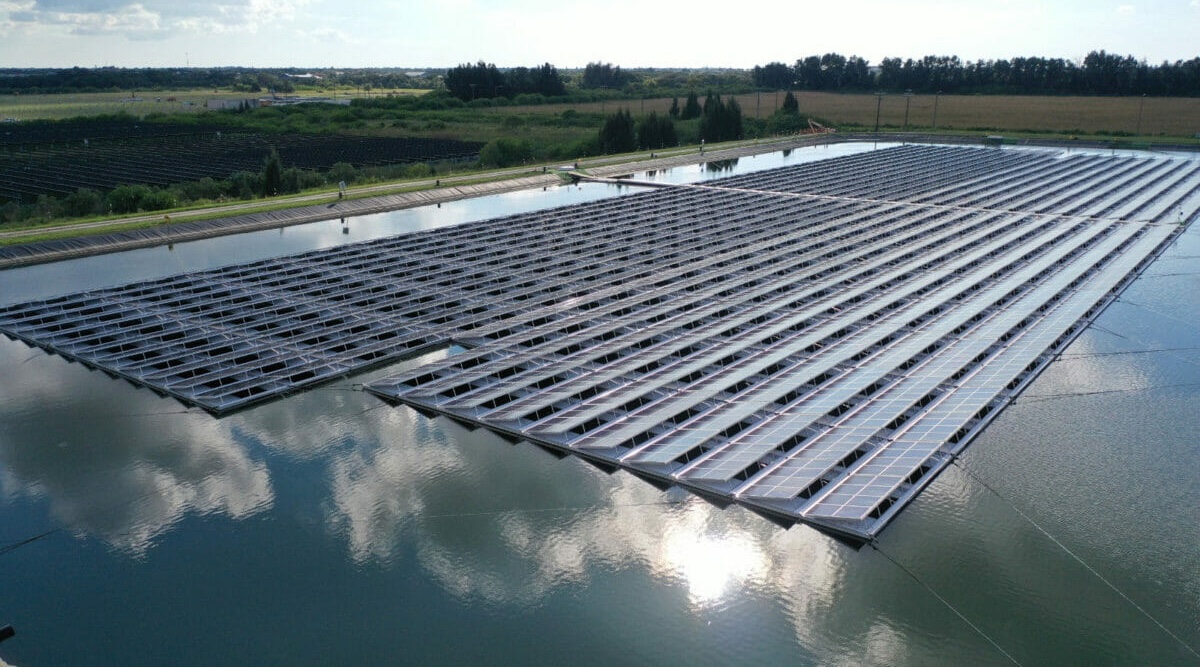
One really cool emerging intersection of the solar and water crises that i think deserves more attention: floating solar on Texas reservoirs, water treatment facilities, and irrigation ponds.
Texas reservoirs and water infrastructure represent a significant opportunity for floating solar installations. Beyond generating electricity, floating solar panels reduce water evaporation from reservoir surfaces. The panels shade the surface, reduce algae growth, and produce power simultaneously. Here’s a really good article that covers the details and benefits of floating solar in Texas (and in general).
This isn’t a distant concept. Floating solar deployments are already operating at municipal water facilities in other states and internationally. For Texas reservoir managers navigating both water stress and energy costs, the economics are worth a hard look. Here’s a link to an article detailing an enormous “floating solar” project planned for Port Arthur: https://cleantechnica.com/2025/11/17/a-texas-sized-391-megawatt-floating-solar-power-plant-is-coming-to-texas-of-course/
Solar-Powered Irrigation: Measurable Results
Here’s a fact: agriculture accounts for roughly 60% of Texas water consumption. Irrigation practices (many of them decades-old) are a major driver of groundwater depletion in the Panhandle and South Texas. Hard, real-world test data collected and analyzed recently show that solar-powered irrigation systems will reduce energy costs while they enable smarter, more efficient water use. A 2025 research study found that solar-powered smart irrigation systems reduced overall water use by 16–25% and energy consumption by 30–40% compared to conventional irrigation, with some implementations cutting greenhouse gas emissions by more than 57%. (https://pmc.ncbi.nlm.nih.gov/articles/PMC11973206/)
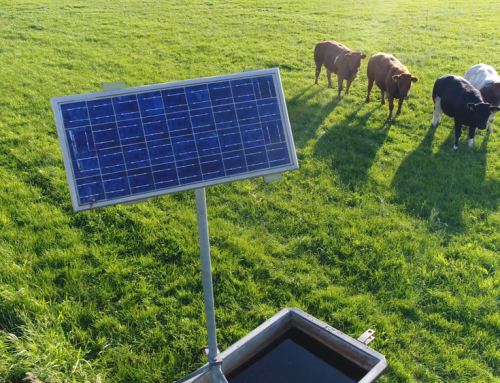
The mechanism is straightforward: solar-powered pumps with variable-speed drives and real-time soil moisture sensors can deliver water precisely when and where crops need it, rather than running on fixed schedules. Off-grid capability matters especially in remote agricultural areas where grid access is limited or expensive.
For Texas farmers managing both energy costs and water rights, solar-powered irrigation represents one of the most practical near-term investments available.
*side note* Here’s an overview published by GVEC (the electric utility) showing how solar is impacting Texas agriculture more broadly
*another side note*
Smart Monitoring and Leak Detection
Texas loses an estimated 88 billion gallons of water annually through aging and broken infrastructure. Ouch. Solar-powered remote monitoring systems -sensors, flow meters, pressure monitors- can identify leaks and anomalies in real time across water distribution networks, without requiring grid connectivity in remote areas. This makes obvious sense, yeah?
This isn’t glamorous technology, but the impact is significant enough to mention. Municipal water systems that deploy solar-powered IoT (“Internet of Things”) monitoring consistently report faster leak detection response times and measurable reductions in non-revenue water loss. (source)
The Commercial Opportunity
For Texas businesses, the water-solar connection shows up in practical ways.
Facilities with high process water use -food and beverage manufacturers, data centers, industrial laundries, agricultural operations- are already dealing with rising water costs alongside rising energy costs. Solar + storage systems can reduce electricity bills and, in some configurations, support water heating, treatment, and pumping operations. Commercial solar and battery energy storage installations at agricultural, municipal, and industrial facilities in Texas are increasingly being designed with water system integration in mind.
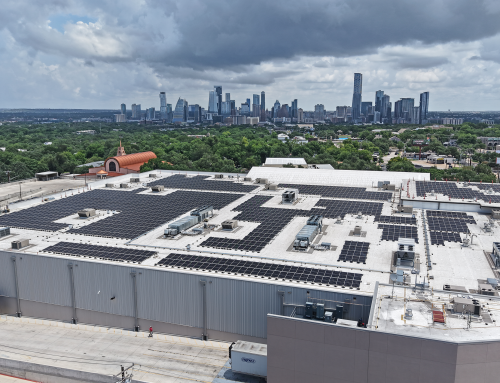
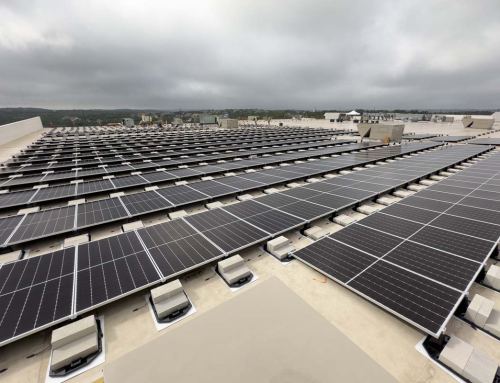
Water utilities themselves are among the most natural candidates for solar. Treatment facilities run 24/7, have large flat roofs or adjacent land, face predictable demand curves, and are often municipal entities with access to favorable financing. The ability to offset energy costs with battery energy storage while maintaining operational continuity during grid stress events seems particularly relevant in a state like ours where the grid and the climate are both increasingly unpredictable.
NATiVE’s Perspective
We’ve been installing solar (and battery energy storage systems!) in Texas since 2007, through droughts, grid failures, and everything in between. The water-energy connection isn’t abstract for us. It’s on the RADAR.
And from here, it looks like Texas’s water crisis isn’t going away. If anything, the 2025 drought data suggests the projections from state water planners were optimistic. Solar power isn’t a single solution -but it can be an increasingly capable tool in the mix, and in several applications, it’s a largely practical, proven, and cost-effective paving stone into the future.
The projects that make the most sense aren’t always the ones with the cleanest payback math. Sometimes the value of energy resilience and reduced exposure to volatile input costs -water included- is a bit harder to quantify -but it’s also a very real aspect for us to think about. If you’re managing a facility where water and energy costs are both material, it’s worth a conversation about what solar and storage could look like for your operation.
Talk to our team to get started.
More Sources we referenced for this piece:


















Leave A Comment