

 Austin Energy’s 2026 Commercial Solar Incentives (PBI, CBI & Standard Offer)
By Adam Glick, Solar Sherpa, NATiVE Solar
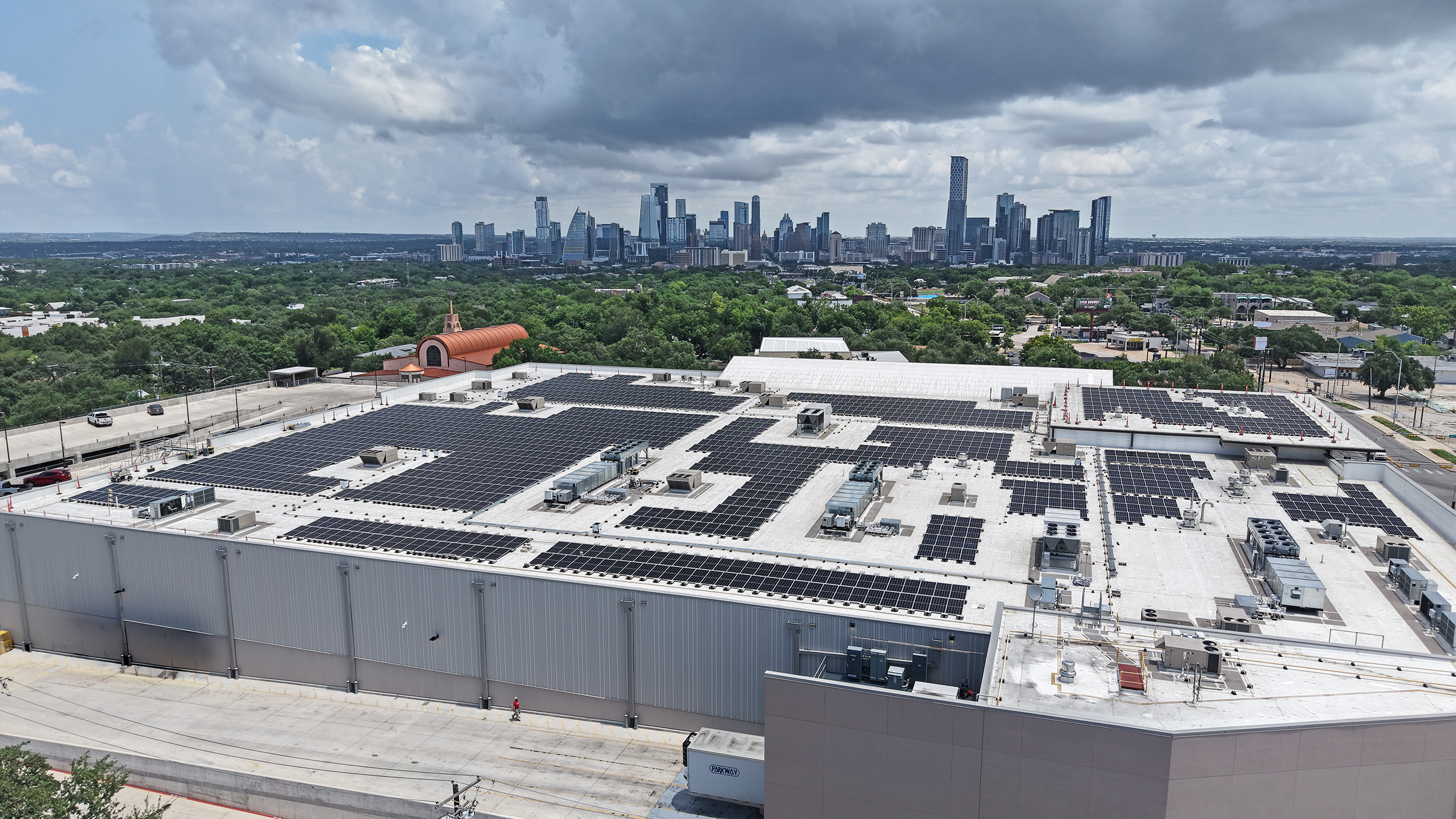
Amid continued strong momentum in Texas for the embrace (despite political and supply-chain headwinds) of solar and renewable energy, Austin Energy (AE) is in the middle of its own solar buildout. The city is currently in the process of installing solar energy harvesting capability on more than 90 City of Austin buildings -and 30+ MW-AC of new capacity. At the same time, incentive programs for solar capacity for commercial customers are filling up -Austin Energy’s own program data from June 2026 shows several incentive tiers already 44–50% subscribed. Austin Energy also raised its commercial and nonprofit incentive levels effective July 1, 2026, so I wanted to post a rundown of what’s currently available -and what the capacity numbers mean for timing.
Two incentive paths: businesses choose one
Austin Energy offers commercial and nonprofit customers a choice between two solar incentives -you can’t take both. A Performance-Based Incentive (PBI) pays out over time as production occurs; a Capacity-Based Incentive (CBI) pays out once, based on system size. Program eligibility is determined by kW-AC, which Austin Energy calculates as 83% of the DC system rating.
Third-party Power Purchase Agreements (PPAs) are not eligible anywhere in Austin Energy’s service territory, for either program.
Capacity-Based Incentive (CBI): a one-time payment
CBI pays a flat rate per watt of installed capacity, issued as a single check after the system passes final inspection and is energized. Rates below reflect Austin Energy’s published levels as of July 1, 2026:
- Nonprofits, systems above 2.5 kW-AC: eligible projects may receive up to $1.00 per Watt, with the total incentive capped at $240,964 per project.
- Businesses with systems 100 kW-AC or smaller: eligible projects may receive up to 70¢ per Watt-DC, capped at $84,337 per project.
One detail worth flagging to whoever runs your numbers: Austin Energy publishes the nonprofit CBI rate per Watt-AC and the business CBI rate per Watt-DC. Because AC capacity is calculated at 83% of the DC rating, that unit difference materially changes the arithmetic. Confirm which basis applies to your project before modeling a payout.
For a nonprofit running a system in the 200–250 kW range, the per-project cap rather than the per-watt rate is typically the binding constraint -meaning the incentive tops out well before the system does. That can still represent a meaningful one-time recovery of capital for a 501(c)(3), and it makes the cap, not the rate, the number to design around. Actual eligibility and payment amounts are determined by Austin Energy at application.
Performance-Based Incentive (PBI): a five-year bill credit
The other option is to take the PBI incentive. PBI pays out monthly, as a bill credit (or a check, if requested), calculated by multiplying that month’s production by the applicable rate. The rebate runs for five years and requires one application per interconnection point. Following Austin Energy’s July 1, 2026 increase, the nonprofit and commercial tiers are now set at the same levels:
- Under 400 kW: 10¢ per kWh
- 400–999 kW: 8¢ per kWh
- 1 MW and above: 6¢ per kWh
Larger commercial projects (over 1 MW-AC) also need to comply with Section D of Austin Energy’s Distribution Interconnection Guide, linked from the eligibility section of Austin Energy’s commercial solar incentives page. Worth flagging early to a facilities or engineering team rather than discovering it mid-application. (We here at NATiVE don’t gloss over the small details. We design and build strictly to code -from the beginning!)
Good so far? Ok now stay with me folks.
Value of Solar (VoS): the credit every system earns, regardless of which incentive you pick
On top of whichever incentive a business selects, all commercial solar production earns a separate monthly bill credit under Austin Energy’s Value of Solar (VoS) rate: 9.91 cents/kWh before the September 2026 increase noted below for systems under 1 MW-AC, and 7.24 cents/kWh for systems 1 MW-AC and larger as of July ’26. Solar energy production and site consumption are metered at the site separately. A business is billed for everything it draws from the grid, then credited for 100% of what its system produces. Unused credit rolls forward month to month, though it isn’t transferable between accounts. (*This is the same basic math that happens for residential solar subscribers on their monthly bill, BTW) Update: in September 2026 the Austin City Council voted to raise the VoS rate from 9.91 cents per kWh, and Austin Energy now lists it at 12.89 cents per kWh for systems under 1 MW-AC, about a 30% increase in the bill credit a solar array can earn. Confirm the current rate for your system size with Austin Energy.
A real project, for scale: Austin Energy’s own published case study on the Mothers’ Milk Bank at Austin describes a 269 kW system (656 panels) that received a CBI payment of $268,960 at the $1.00-per-watt rate in effect at the time of that installation -the same nonprofit rate Austin Energy has now returned to following the July 2026 increase. The facility also reported average monthly VoS credits of roughly $2,900, covering close to 98% of its electricity costs. It’s a useful illustration of how the incentive stack works in practice, and a good reminder that rates move over time -in both directions.
An option that requires no capital outlay: the Solar Standard Offer Program
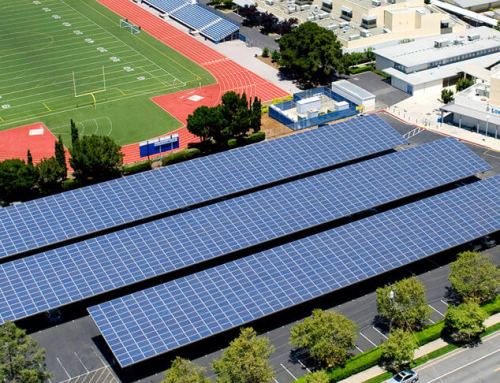
For commercial property owners with a large roof or parking lot who don’t want to own or finance a system themselves, Austin Energy’s Solar Standard Offer Program offers a different structure: host a Community Solar project -either self-owned or leased to a third-party System Owner- and the system owner gets paid for some of the electricity generated on their land.
Eligible system sizes run from 50 kW-AC to 10 MW-AC. In this plan, the system owners are paid a cash rate (not a bill credit) currently set at 11.24 cents/kWh for systems under 1 MW, and 8.41 cents/kWh for larger systems (*this rate was set in January 2025 and is next scheduled to update in November 2026). As of April 2, 2026, qualifying projects can also receive a Guaranteed Minimum Price incentive setting a floor of $0.11/kWh (under 1 MW-AC) or $0.08/kWh (1 MW-AC and up), applied as needed over the first 10 years of production. There’s no utility bill impact to the property owner hosting the system -they receive a monthly payment for the energy produced by the system hosted at their site, which can offset ops spend. It’s a structure most commercial property owners haven’t encountered before, and worth a closer look if capital outlay is the main obstacle to going solar.
Why timing matters right now
Austin Energy’s incentive programs draw from a limited, first-come-first-served pool of funding, and the utility notes that offerings, program guidelines, and rebate levels are subject to change without prior notice. Per the utility’s own June 2026 contractor update, subscription levels stood at roughly 50% for PBI Tier 2, 44% for CBI Tier 4, and 50% for the Standard Offer Program. There’s still time, but the mechanics of the process matter more than usual at this stage: Austin Energy won’t approve a project without a signed contract and an approved Distributed Generation Planning Application (DGPA), installation can’t legally begin before the customer and contractor receive a Letter of Intent or Letter of Approval, and if a project’s scope grows after that letter is issued, the incentive amount does not increase. Austin Energy also makes no financial commitment before the Letter of Intent is issued, and a project that isn’t completed before the LOI expires has to reapply at whatever rate prevails then. Accurate system sizing before submitting the paperwork is the difference between capturing the intended incentive tier and leaving money on the table. Reputable commercial solar firms like NATiVE will work with you and your leadership team to navigate the administrative red tape, as well as handle all permitting, inspections, etc. with the city.
Whew. OK. We know it’s a lot to consider. Take a breather….
So here’s how the process actually works in a nutshell:
- Decide between PBI, CBI, or the Standard Offer Program. Your Ops and Controller’s office will need to run the numbers. We (NATiVE) can help validate the analysis.
- Work with an Austin Energy participating contractor and get multiple bids.
- The contractor submits the application and a Customer Agreement Form on your behalf.
- Austin Energy issues an Encumbrance Letter if the project is eligible, then requests supporting documentation (DGPA, interconnection agreement).
- Once fully approved, Austin Energy issues a Letter of Intent or Letter of Approval -installation cannot begin before this step.
- The contractor handles permitting, installation, and coordinates Austin Energy’s final inspection.
- Once energized, PBI credits begin appearing on the monthly bill; CBI payments are mailed as a check.
How NATiVE Solar approaches commercial projects
NATiVE Solar treats commercial solar projects as systems engineering and balance sheet challenges delivered as long-term energy infrastructure, not incentive-chasing exercises. That means sizing a system against a facility’s actual (and projected) load profile and demand charge structure first, then layering Austin Energy’s PBI, CBI, or Standard Offer incentives on top of a design that already makes sense for the building and business needs. For facilities managing high or volatile demand charges, pairing solar with battery energy storage can support a demand charge mitigation strategy -though outcomes depend on load patterns, utility rate structure, and system design -it’s not a fixed formula or one-size-fits-all process. NATiVE has been designing, building, and maintaining commercial-scale systems in Texas since 2007, which means navigating ERCOT interconnection requirements, AHJ permitting, and Austin Energy’s DGPA process is a known quantity and our permitting team is razor-sharp at getting paper and approvals pushed through the system. See recent local work on our Austin commercial solar and battery storage page. For more on where the Texas commercial market is headed, see NATiVE’s 2025 commercial solar and storage overview.
If your facility is evaluating solar or battery storage under Austin Energy’s current incentive structure, get started with a conversation about your specific site and load profile.
Incentive levels, caps, and eligibility are set by Austin Energy and are subject to change without notice. Figures above reflect Austin Energy’s published rates as of July 1, 2026. Confirm current levels with Austin Energy or your solar provider before building them into a project budget or pro forma.
Sources:
- Solar Incentives for Your Business — austinenergy.com
- Austin Energy increases solar incentives for residential and commercial customers, July 1, 2026 — austinenergy.com
- Value of Solar (VoS) Rate — austinenergy.com
- Solar Standard Offer Program — austinenergy.com
- Austin Energy Solar Contractor Administrative Meeting slide deck, June 18, 2026 (Customer Renewable Solutions)
- Mothers’ Milk Bank at Austin case study, published on austinenergy.com’s commercial solar page
Rates last verified against Austin Energy published sources: September 14, 2026.















Leave A Comment