


 Texas Solar and Battery Storage Property Tax Exemptions -The One-Page Form Some Texas Solar Owners Forget to File
By Adam Glick, Solar Sherpa, NATiVE Solar
Here’s a fact that surprises some folks who add solar to their property in Texas: the state will exempt 100% of the added property value your system creates from property tax -for as long as you qualify!- and more than a few owners never actually claim it. I think this happens not because it’s hard or complicated. -It’s just that nobody told them it exists, or else they just plain forgot about filing it. Dang.
So here’s the deal folks: The exemption comes from Texas Tax Code Section 11.27, and here’s the plain version: when your appraisal district figures out your property (either residential or commercial) is now worth more because of the solar array (and any on-site battery energy storage it charges), that added value is exempt from property tax under the Texas tax code. Not reduced. Exempt. For property tax purposes, that added value is treated as if the panels were never installed, as long as the system stays on your property and keeps qualifying.
A quick note on batteries: the statute’s definition of a “solar energy device” includes equipment that stores the energy your panels convert. So a battery energy storage system charged by your solar array fits the definition. A standalone battery charged only from the grid, with no solar attached, isn’t clearly covered, so ask your appraisal district before you count on it.
The way you actually get the Tax Exemption
You (or your tax professional) prepare and file Form 50-123 (Exemption Application for Solar or Wind-Powered Energy Devices) with the appraisal district in the county where your property is located. Don’t send it to the Texas Comptroller. The Comptroller publishes the form, but the form itself says not to file it there. It’s two short pages. Just fill in your property info, a description of the device(s) (NATiVE Solar can help you with this part), the installation date, and a certification that it’s primarily for on-site use. File it between January 1 and April 30 of the tax year you want it to apply. Once the chief appraiser approves it, you generally don’t have to refile. No annual renewal. It stays in effect as long as the system keeps qualifying and you still own the property. NICE!
A few fine-print items, straight from the form and the tax code: your appraisal district can ask you to file a new application to confirm you still qualify; you’ll need to file again if you add equipment that wasn’t listed on your original application; and you’re required to notify the appraisal district in writing (before May 1) if you stop qualifying. If you sell, the exemption doesn’t transfer with the deed, and the new owner files their own Form 50-123.
Here’s Some Quick Math
Here’s a scenario that can illustrate what this property tax exemption could be worth. Using the numbers Texas Land Tax walks through: let’s say your appraisal district determines your solar array added $30,000 in value to your home. At a typical Texas rate around 1.8%, that’s roughly $540 a year you’re not paying. Keep that up over a 25-year system lifespan and the cumulative savings could land in the five figures -on a form that takes maybe fifteen minutes to fill out. (Your actual number will depend on your local tax rate and how your appraisal district values and depreciates the equipment over time, so treat this as an illustration, not a promise.) And good news for anyone worried about “losing” another benefit to get this one: it stacks cleanly with your homestead exemption and, if you’re on ag land, your agricultural valuation too. Filing for one doesn’t cost you the other.
Some Tricky Bits
One place people sometimes get tripped up is the phrase “primarily for on-site use.” So here’s the deal: If your system is powering your house and occasionally sending a little surplus back to the grid through net metering, you’re squarely inside the exemption. Where it gets contested is on the commercial property end — if you lease land to a developer who’s selling essentially all the power to the grid, that’s a different animal, and the landowner’s 11.27 exemption typically won’t apply. For the overwhelming majority of homeowners and small businesses reading this, that’s not your situation, so don’t let it scare you off. (We go into more detail on the commercial property tax stuff in the next section.)
One thing worth double-checking: Texas has 254 counties, and while the law is the same everywhere, how fast and how strictly each appraisal district processes Form 50-123 varies. The form asks you to attach photos and invoices for the device and installation if you have them. Some districts want just the form. Others also ask for your interconnection agreement. Call your appraisal district before you file, ask what they want alongside the form, and you’ll avoid the most common delay.
Why this matters: this is a real, long-lasting, no-catch benefit that’s easy to just… not do. If you already have solar and haven’t filed Form 50-123, that’s like fifteen minutes against years of savings you’re potentially leaving on the table right now. And if you’re evaluating a system right now, talk to our team -we’ll help.
It’s a little Different for Commercial Properties
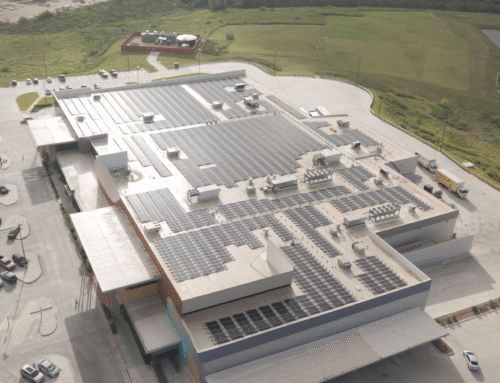
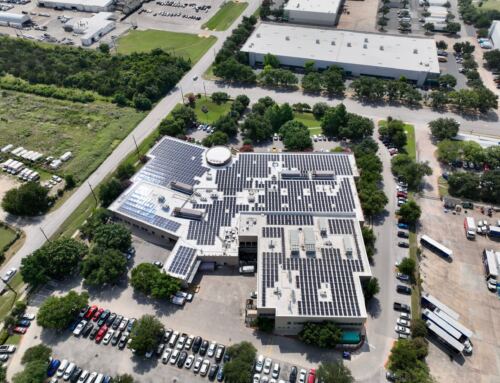
The exemption itself applies the same way -100% of the added value, no annual refiling- and it’s the same tax form (50-123), but there are three real differences you (or your tax folks) need to know if you’re evaluating commercial solar for a business.
1. It covers you even if you don’t own the building. Since a 2021 update to the law (Section 11.27(a-1), added by SB 63), the exemption applies to whoever owns the solar equipment, regardless of who owns the real property it sits on. That matters for commercial tenants who install their own system, and for third-party-owned (TPO) commercial arrays -the exemption follows the equipment owner, not the landlord.
2. It may need to go on your annual business personal property rendition. If your appraisal district classifies the solar equipment as business personal property (BPP) rather than a real property improvement, Form 50-123 tells you to attach a copy of your BPP rendition when you file, and you’ll keep listing that equipment on your rendition going forward. Texas businesses file BPP renditions every year by April 15 regardless (per Gill, Denson & Company), so this isn’t extra paperwork you wouldn’t otherwise be doing -but unlike a homeowner’s one-and-done Form 50-123, the exempt value has to keep showing up correctly on that annual filing so it doesn’t accidentally get taxed.
3. Check how it interacts with any tax abatement agreement. This is the one that can sometimes catch commercial and industrial developers off guard. If your facility already holds (or is negotiating) a Chapter 312 property tax abatement for a broader expansion or relocation, don’t assume the solar exemption simply stacks on top. Abatement agreements come with their own terms about what property they cover and how it’s valued, and those terms can overlap with the equipment the Section 11.27 exemption would cover. Get your tax advisor to review the agreement and your Form 50-123 together before you file.
As we mentioned above, Texas has 254 appraisal districts, and how each processes Form 50-123 varies. Again, some may ask for photos, the installation invoice, and/or the interconnection agreement. Find your appraisal district’s contact info here and give them a call. Want the deeper dive on commercial and land-lease tax questions? See Solar Opportunities (and Tax Implications!) for Commercial Property and Land Owners.
Why this matters: for commercial property owners specifically, there are a few structural questions (ownership structure, BPP classification, any existing abatement) worth resolving before you file rather than after. And if you’re evaluating a system right now -residential or commercial- talk to our team and your tax professional.
Thanks for reading, y’all!
The obligatory disclaimer here :) – NATiVE Solar is a solar and battery storage design and installation company -not a tax, legal, or accounting firm. This article is provided for general informational purposes only and shouldn’t be treated as tax or legal advice. Rules, deadlines, and documentation requirements vary by county and can change, so confirm your specific situation with a licensed CPA, tax attorney, or your county appraisal district before filing.
Sources
- Form 50-123, Exemption Application for Solar or Wind-Powered Energy Devices — Texas Comptroller of Public Accounts
- Texas Tax Code, Section 11.27 — Solar and Wind-Powered Energy Devices (via Justia)
- Texas Tax Code, Section 11.43 — Application for Exemption (via Justia)
- Senate Bill 63, 87th Texas Legislature (2021) — Texas Legislature Online
- County Appraisal District Directory — Texas Comptroller of Public Accounts
- Texas Solar and Wind Property Tax Exemption: Your Guide to Form 50-123 — Texas Land Tax (updated August 6, 2026)
- Don’t Forget Your Texas BPP Rendition: What Business Property Owners Must File by April 15 — Gill, Denson & Company Tax Advisors















Leave A Comment