


 Austin Energy’s 2026 Residential Solar Rebates, Value of Solar & Battery Incentives
By Adam Glick, Solar Sherpa, NATiVE Solar
Austin Energy Residential Solar Incentives, Explained (Summer 2026 Update)\
Austin Energy is actively expanding its residential energy programs in 2026 — a new 40 MW battery capacity agreement with Base Power (announced May 19, 2026) and updates from AE’s June 18, 2026 solar contractor meeting both signal more (and better!!) homeowner options. Here we’re going to break down the current solar rebate, VoS monthly credit, and the new battery energy storage incentives Austin Energy residential rate payers.
The Austin Energy Residential Solar Rebate
For the past few years, Austin Energy (“AE”) has offered a $2500 rebate check for eligible new home solar installations (system-owned, not leased/PPA). But starting this month, they have raised the incentive to $4000. This is a pretty sizeable increase and moves the numbers for system ROI and payoff timelines. Here’s the deets:
- Eligibility: system must be 3 kW-DC or larger, mostly free of shading, installed by an Austin Energy participating contractor (that’s us!), and the rebate confirmation letter must be issued before installation begins. *You will need to send AE a copy of the system design specs and performance projections we provide as a part of our process*
- Third-party Power Purchase Agreements (PPAs) are not allowed in Austin Energy’s service territory -only customer-owned or loan/lease-financed systems qualify.
- Process: Solar Rebate Quiz → rebate reference number → hire participating contractor → confirmation letter → install → inspection/PTO → QA review → rebate check mailed.
*Source: Rebates for Home Solar Systems, austinenergy.com reviewed 07/07/2026)
Value of Solar (VoS): How the Bill Credit Works
Updated October 2026: Austin Energy now credits residential solar production at 12.89 cents per kWh for systems under 1 MW-AC (effectively all residential systems), per its Value of Solar rate page. That’s up from 9.91 cents per kWh, the rate in effect from March 2023. See our update on the higher rate.
As everybody is expecting electricity costs (monthly bills) to increase (perhaps dramatically) over the next few years, we are expecting the VoS rate to likewise increase -but nobody is making bets on this quite yet.
Here’s a refresher on how residential VoS credits from Austin Energy work out on the monthly utility bill:
- Solar production and home consumption are metered separately; customers are billed for all consumption,
- then credited 100% of production at the VoS rate; unused credits roll month-to-month but reset each December billing cycle.
This isn’t nearly the deal that early solar adopters got with 1:1 “net metering,” which placed the same value on your solar-generated energy as the energy you got from the grid. It was a great deal. But those days are long gone. Still, the VoS credit provides a great incentive to go solar and save a ton on your energy costs over time.
Here’s the direct link if you feel the need to dig in to this a bit more : Value of Solar (VoS) Rates, austinenergy.com
Austin Energy’s “Power Partner” Battery Pilot Program
For those who install (or have already installed) battery backup with their solar system, AE’s Power Partner program can provide you with a sizeable return over time. The tradeoff here is that with enrolment into the program, you agree to let AE discharge some of your batteries’ stored energy back to the grid when it’s needed. (This helps reduce grid and power plant stress at peak consumption times.) The agreement in writing is that they cannot discharge your battery below 20%, and can’t touch it before or during severe storm events. This is a type of VPP (virtual power plant) offering not terribly different in function than the others we’ve written about here recently
So here’s how it works :
- The battery incentive pays $500 upfront per qualifying battery system (system must have received Permission to Operate on or after 2/18/25),
- plus an annual performance payment of roughly $75/kW of average demand reduction. (AE’s own worked example (a single Tesla Powerwall, 13.5 kWh battery capacity, 20% reserve) nets ~$324/year.
- Eligible battery brands (as of October 2026): Enphase IQ, FranklinWH, Generac PWRcell 2, SolarEdge Home Battery and Tesla Powerwall. The battery must be customer-owned and installed by a participating contractor.
- Enrollment: Austin Energy says there’s no limit on the number of batteries enrolled, but funding is limited and first-come, first-served; roughly 125 customers were enrolled as of June 2026. Events are limited to 40 a year, excluding grid emergencies.
And here are some of the rules :
- no Third-Party-Owned/leased battery systems currently eligible; dispatch events run 2–3 hours, capped at 40/year (mostly hot summer afternoons),
- Reserve capacity (~20%) is maintained, no events during major storms, and customers can opt out per-event or unenroll entirely without penalty.*Note* VoS bill credits as discussed in the previous paragraph are unaffected by Power Partner enrollment -Austin Energy still credits 100% of solar production regardless of whether that energy charges a battery, powers the home, or is exported.
Source: Austin Energy Solar Contractor Administrative Meeting, June 18, 2026 (Customer Renewable Solutions), slides 14–19; corroborated by austinenergy.com/green-power/solar-solutions/for-your-home battery-backup section.
A Second, Unrelated Battery Option: Base Power
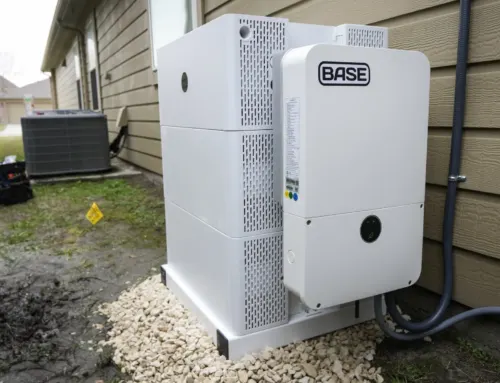
Base Power is a private company headquartered here in Austin (at the old Austin-Stateman building across the river from downtown) offering its own battery lease program. They have an interesting business model: they manufacture and deploy home battery systems, then monetize them two ways -as a retail electric provider (REP) selling battery-backed power plans directly to consumers, and as a grid-services partner selling dispatchable battery capacity to utilities. In practice, they basically become your sole electric utility company after installation of their battery backup system.
Consumer offering: Customers can lease a Base-owned 20 kWh battery system rather than buying one outright. They charge roughly $695 install + $19/mo for one unit, or $995 + $29/mo for two, on a 3-year contract (per Austin Energy’s June 2026 contractor deck; Base sets its own current pricing at basepowercompany.com/pricing). Base also now sells a “battery-free” retail electricity plan in some territories. These are pretty big batteries, designed for “whole home” backup (depending, I guess, on your monthly electrical usage). Just like other VPP offerings, they may discharge part of your battery back to the grid when utilities hit peak loads.
Utility partnerships (the other half of the business): Base contracts with utilities across Texas for grid capacity -the utility pays Base to keep a fleet of customer-sited batteries charged and dispatchable during peak demand, independent of what Base charges the homeowner. Deals so far:
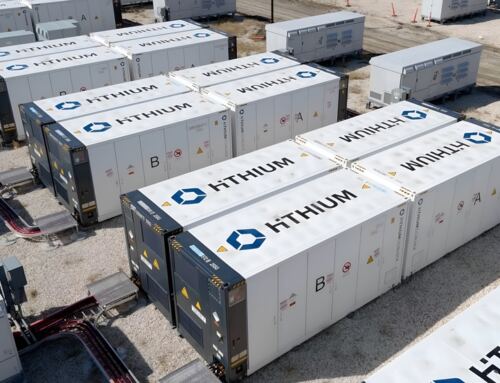
- Austin Energy: 40 MW / ~2,000 homes, announced May 2026, targeting completion by end of 2027
- CoServ (Denton Co-op, North Texas): 100 MW, Base’s largest deal to date
- Guadalupe Valley Electric Cooperative (South Texas): 50 MW, announced April 2026
- El Paso Electric: pilot program, first install completed March 2026
*note* The Base Power program is not affiliated with Austin Energy’s Power Partner program and is currently ineligible for Power Partner incentives, which I wrote about earlier in this article.
Source: Austin Energy Solar Contractor Administrative Meeting, June 18, 2026, slides 8 and 18; and https://austinenergy.com/about/news/news-releases/2026/Austin-Energy-expands-local-battery-storage-to-support-reliable-affordable-power
Don’t Forget that Property Tax Exemption
This isn’t an Austin Energy thing, but the State of Texas offers a property tax exemption for on-site renewable energy systems (solar), which may apply to qualifying home solar installations.
We here at NATiVE don’t offer tax advice, but for those interested in this potential incentive, please visit or contact the Texas Comptroller.
Source: Texas Comptroller — Property Tax Exemptions
Choosing a Contractor
Here’s a bit more info worth mentioning -Only Austin Energy participating contractors (shameless plug for NATiVE Solar here) can be used for installation of solar/battery systems eligible for AE’s rebates/incentives; customers can use a non-participating installer but forfeit rebate eligibility. Please don’t do that. :) See how we design residential solar and battery systems in Austin.
Our Perspective
The majority of our residential clients are now choosing to add battery backup storage to their new (or existing!!) solar installation. The benefits are clear.
Yes, adding batteries can push the system price up considerably. No, batteries may not “pay for themselves” over time in the way solar panels do. But with a properly designed solar+battery infrastructure for your property, and new incentive options, you can reap the benefits and peace of mind that comes with on-site energy storage while putting a few bucks back in your pocket.
If you have questions about residential battery energy storage -or any solar-related matter- we’d love to be a local resource for helping to explore the options. Get in touch and let’s have a chat about it.
















Leave A Comment