

 Commercial Solar in DFW, Houston and San Antonio: Same State, Different Math
By Adam Glick, Solar Sherpa, NATiVE Solar

Here’s a question we get a lot: “Does commercial solar make sense in my city?” And the honest answer is this: The sun doesn’t change much between Dallas and San Antonio. Your utility does, though. And so do the rules that decide what a kilowatt-hour of solar is actually worth on your bill -and which property tax offsets might apply.
We’ve already written plenty about Austin, including Austin Energy’s 2026 commercial incentives and the recent Value of Solar increase. So this one’s about the other three big metros.
The Split That Matters Most
Texas (overseen by ERCOT, mostly) basically has two kinds of electric markets:
- Deregulated (retail choice): most of DFW (Oncor) and greater Houston (CenterPoint). You pick a retail electric provider (REP) for your energy. The wires utility charges for delivery, and that part is regulated.
- Municipal or co-op: San Antonio (CPS Energy), Austin (Austin Energy) and lots of co-ops. No retail choice here. The utility sets the rates, the solar programs and the export credits.
There are some differences that matter here based on where your business site is plugged into the grid. Here we go…
At a Glance: Three Metros, Three Rulebooks
| DFW | Houston | San Antonio | |
|---|---|---|---|
| Utility | Oncor (wires) | CenterPoint (wires) | CPS Energy (municipal) |
| Retail Energy Provider (REP) choice? | Yes | Yes | No |
| Who sets export value | Your REP contract | Your REP contract | CPS Energy |
| Local solar rebate | None from Oncor | None from CenterPoint | Commercial rebate for small business, schools, nonprofits |
| Watch item | 2026 base rate change + temporary surcharge | Resiliency and storm-recovery charges | Export credit well below retail |
[REVIEW: confirm table entries against current utility tariffs and REP terms before publishing]
DFW (Oncor Territory)
Your bill has two main pieces. There’s the energy charge from your REP, which you can shop around. And there’s Oncor’s delivery charge, which you can’t.
Solar touches both, just in different ways. Here’s the breakdown:
- Every kWh your system makes and you use on site is a kWh you don’t buy from your REP. Simple enough.
- Some delivery charges are billed per kWh, so self-consumed solar can trim those too. Demand-based charges are a different animal, and solar alone doesn’t reliably move them. (but on-site battery energy storage (BESS) might!)
- Exported power is worth whatever your REP’s buyback terms say. Commercial contracts are usually negotiated, and some don’t pay for exports at all.
Oncor also changed its base rates in June 2026 and tacked on a small temporary surcharge in August. Rising delivery costs won’t flip the solar math overnight. But over a 25-year system life they definitely push in solar’s favor if we take into account the projected rising cost of electricity in Texas (a projected 29% price increase by 2030).
Houston (CenterPoint Territory)
Here we see the same basic setup as DFW, with a gulf coast twist: delivery costs have been climbing as CenterPoint pays for storm recovery and its 2026–2028 hurricane resiliency plan. (*One should probably expect these costs to ultimately get passed to consumers*)
The core logic doesn’t change, though. Try to size the system for what you use on site, and treat exports as a bonus, not the business case.
*I wanted to include the links to Centerpoint’s commercial solar stuff but they all seem to be broken at the moment: https://www.centerpointenergy.com/en-us/for-business/rebates-incentives
Oh, one other thing worth including here for H-town commercial properties: a standard grid-tied commercial solar-only system shuts off during a grid outage -ie major hurricanes. That’s a safety requirement, not a flaw. If keeping the lights on through a hurricane is the goal, that’s a solar + storage (or backup generation) conversation, and NATiVE’s commercial solar consulting team can design the system accordingly for this approach from day one.
San Antonio (CPS Energy)
CPS Energy is city-owned, so there’s no REP to shop and no third-party buyback plan to compare. CPS sets the export credit itself, and it’s generally well below what you pay for grid power. This doesn’t mean that commercial solar isn’t a solid long-term investment -it very likely still is.
How does that work, and what’s the upside here? CPS still offers a commercial solar rebate incentive for small businesses (systems under 100 kW AC), schools and nonprofits, capped at $80,000 or 50% of the invoice cost, whichever is less. And, of course, installing solar is the best way to hedge against electricity prices, which are expected to soar over the next 5-20 years.
Texas Commercial Power Is (Comparatively) Cheap. But That Cuts Both Ways…
Average commercial electricity price, February 2026 (¢/kWh)
Source: EIA data as reported by ElectricChoice/industry trackers, February 2026.
Retil commercial electricity is pretty darn cheap here compared to the rest of the country. But also, solar export tarriffs (what they utility pays or credits you for your solar-produced energy tends to be lower here as well.
The good news is based on what we know : Texas enery prices are set to soar, and solar is a best-bet hedge against this trend. Your OPEX line item for solar-based energy cost offsets generally looks really good when projected out over the expected lifetime of the system.
What Applies Everywhere?
- The federal tax credit. Commercial solar projects that didn’t begin construction by July 4, 2026 generally need to be placed in service by December 31, 2027 to be eligible for the 48E credit. Eligibility varies, so talk to your tax advisor. More on this deadline in our placed-in-service post.
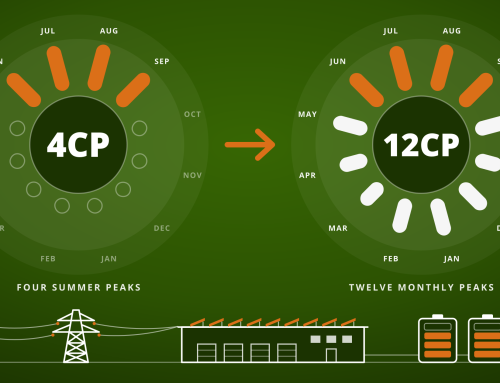
- Demand charges. ERCOT is moving transmission cost allocation from 4CP to 12CP, which changes how peak demand gets billed for larger facilities. Batteries are usually the tool for that job, not solar. See ERCOT 12CP: What the End of 4CP Means for Texas Facilities.
- Property taxes. Texas exempts the added value of a solar system from property tax. But you do have to file for it. (We see folks miss this more than you’d think.)
- Cheap power is a real factor. Lower electricity prices can mean a longer payback here than in high-cost states. Anybody promising otherwise without looking at your bills is guessing.
So How Do We Approach It?
Before we talk system size, we want to see 12 months of bills, plus interval data if you’ve got it. The same 500 kW system can look very different on an Oncor account under one REP contract than it does on CPS Energy rates. We’d rather show you that up front than after you’ve signed. [REVIEW: confirm process]
Got a facility in DFW, Houston or San Antonio and want a straight answer on whether solar, storage or both make sense? Let’s talk. Or see how we approach commercial solar in Texas.
















Leave A Comment