


 The Near-Term Future of Solar Energy in Texas – Summer 2026 Update
By Adam Glick, Solar Sherpa, NATiVE Solar
A Summer of 2026 Quick Update on Where All-Things-Solar Actually Stand
When we originally wrote this post back in 2023, a lot of the solar growth numbers were still projections. The industry (including us here at NATiVE) was pointing at forecasts and saying “trust us, this is coming.” Well -it came. It’s here. In most cases the reality landed pretty close to or ahead of what the optimists were predicting, which doesn’t happen all that often. So this seemed like a good time to update the page with what’s actually happened, and what’s worth paying attention while heading deeper into ’26. Here’s the high-level bits -kindly submitted for your reading pleasure and education.
Fair warning: the picture isn’t uniformly rosy depending on which segment you’re looking at. The utility-scale story is genuinely extraordinary. The commercial-scale picture is looking pretty nice, but there’s some urgency to the stuff built. The residential solar (and solar+battery!!) story is more complicated right now. I’ll cover both.
Solar Is Now the Dominant Source of New U.S. Power Generation -It’s Simply a Fact
The U.S. solar industry installed 43.2 gigawatts (GW) of new capacity in 2025 -the fifth consecutive year solar ranked as the #1 source of new electricity generation added to the American grid, accounting for 54% of all new generating capacity. (SEIA / Wood Mackenzie, Solar Market Insight 2025 Year in Review) It’s not a trend at this point. It’s just how the country builds power infrastructure now.
**I know, i know – you’re thinking: “what about all those gas-steam-fired electricity generation plants that got approved?” We know they’re being built. We know that a couple of (gas-fired) “peaker plants” will come online in Texas in ’26. That’s expected to yeild about 800 Megawatts (that’s only 0.8Gigawatts) of new electrical supply for the grid. Other planned gas-turbine plants are expected (but not destined) to come online over the next few years. But we’ll have to wait and see… This article isn’t about that. :)**
National solar capacity is expected to grow roughly 12% in 2026 over 2025, with close to 70 GW (overall) of new solar generating capacity scheduled to come online across the U.S. in 2026 and 2027 combined -that’s a whopping a 49% increase in U.S. solar operating capacity compared to end-of-2025 levels. (U.S. EIA, Short-Term Energy Outlook, January 2026) And this is happening against some very unfriendly headwinds for our industry -federal policy uncertainty, tariffs on imported solar components, and a changing incentive landscape -none of which have been trivial. The industry is navigating all of that and is still expanding. Investments in solar and battery energy storage keep stacking up. Make of that what you will, friends.
Texas, in Particular, Is Doing Something Kinda Remarkable
The ERCOT grid -that’s the Electric Reliability Council of Texas, the independent operator that manages power for most of the state- is growing faster than any other U.S. grid in terms of electricity demand. (U.S. EIA, ERCOT increasingly meets rising demand with solar, wind, and batteries, October 2025) And it’s increasingly meeting that demand with solar and storage rather than new gas capacity.
I’m a data junkie and some numbers I find genuinely striking: Texas is projected to account for roughly 40% of all U.S. solar capacity additions in 2026. And the EIA projects that solar generation within ERCOT could surpass coal-fired output for the first time ever this year — with solar expected to reach 78 billion kilowatt-hours on the ERCOT grid in 2026, compared to 60 billion for coal. (U.S. EIA, Electricity generation from solar could exceed coal in ERCOT for the first time in 2026, May 2026) That would be a genuinely historic milestone for the Texas grid, and it would have seemed almost implausible a decade ago when Texas had essentially no utility-scale solar to speak of.
On the battery storage side, Texas is expected to represent about 53% of national utility-scale battery storage capacity additions in 2026 — 12.9 GW of the roughly 24 GW coming online across the whole country. (NATiVE Solar, Texas Solar News Roundup May 2026) From a single state. The concentration of build-out here is extraordinary.
The Distributed and Rooftop Picture: More Complicated
The grid-scale numbers are impressive. The story for residential and commercial-scale solar and energy strorage is a different conversation right now, and I think it’s worth being honest about that, folks.
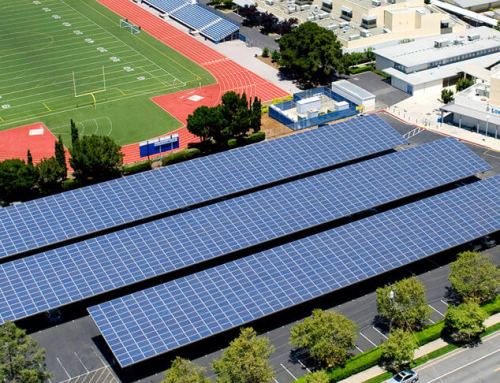
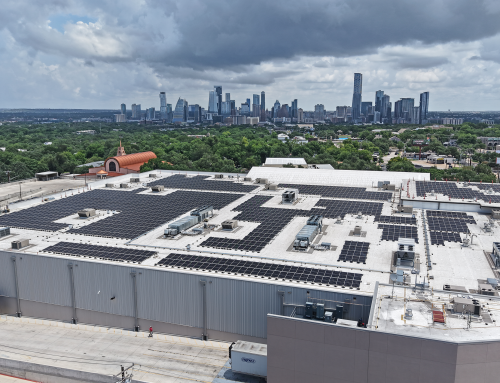
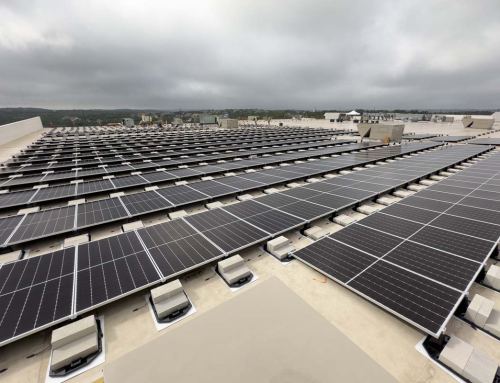
On the commercial side, 2025 was actually pretty decent. Commercial solar installations grew 6% year-over-year in 2025, adding roughly 2,345 MW of new capacity nationally. (SEIA / Wood Mackenzie, Solar Market Insight 2025 Year in Review) For commercial and industrial property owners, the Section 48E investment tax credit was still in play for projects that met construction-start requirements -and for those that got their projects moving before the July 4, 2026 construction-start deadline, a four-year safe harbor window is still on the table. NATiVE’s Solar commercial solar+battery business revenue grew the most ever in ’25. 2026 is looking like a pretty safe bet on the commercial solar front. And commercial projects started now(ish) and completed (post-commissioning and in service) by the end of 2027 will still produce some very heft (up to 40%) tax credits. There is now a bit of a “mad dash” for companies which have been sitting on the fence. Timelines are getting tight now, so solar things are busy on this front.
On the residential side, things got harder. The One Big Beautiful Bill Act (OBBBA), signed into law on July 4, 2025, eliminated the 30% Section 25D federal residential solar tax credit effective December 31, 2025. There was a predictable late-year rush to get systems installed before the deadline, but equipment shortages and compressed timelines meant a lot of homeowners who wanted to qualify couldn’t. Final residential installations for 2025 came in at around 4,647 MW -down about 2% from 2024. (SEIA / Wood Mackenzie, Solar Market Insight 2025 Year in Review)
Heading into 2026, SEIA and Wood Mackenzie are projecting a residential market contraction of roughly 19% as the post-25D tax code reality sets in. (SEIA / Wood Mackenzie, Solar Market Insight 2025 Year in Review) That’s a significant headwind. It doesn’t mean residential solar doesn’t make sense -the economics still depend heavily on local electricity rates, system sizing, financing structure, and whatever state-level incentives might apply -but it does mean that the federal incentive landscape for homeowners looks very different in 2026 than it did in 2023 when this post was originally written. Judging by various analysis, we expect the Texas Residential solar (plus battery!) market to trend flat to slightly downward. We’re ok with this. The market moves. NATiVE Solar rolls with it since 2007. We’ve seen timid and mixed-story markets come and go.
Battery Energy Storage Has Gone from “Nice to Have” to Required Infrastructure
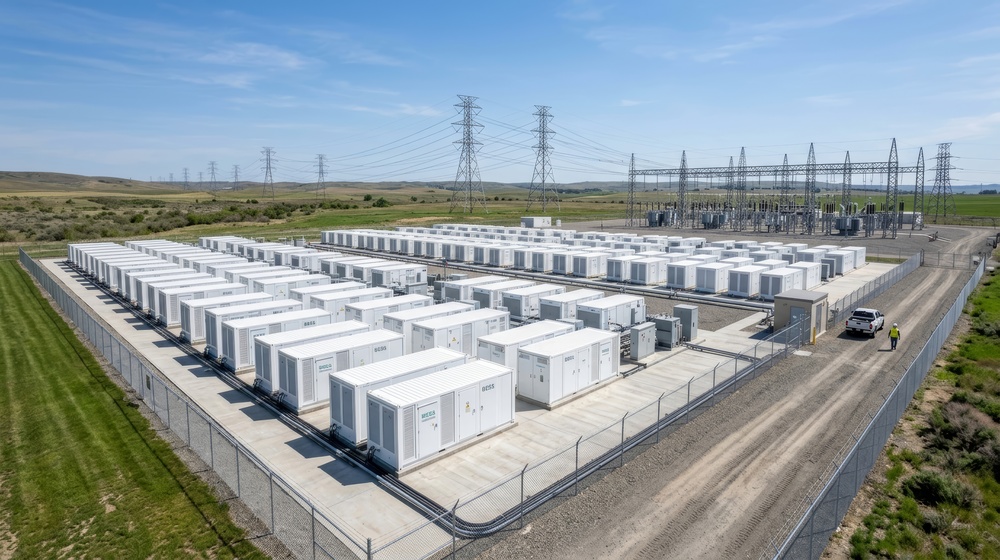
When this post was originally written, the battery storage conversation was mostly about whether prices would come down enough for it to make sense for most people. That conversation has moved, but not significantly. For some residential and commercvial property owners, it’s still not always perceived as worth the expense in certain situations. And sometimes that’s true from looking at the numbers. But with some battery prices ($/kW/hour) beginning to drop and incentive programs like VPPs (virtual power plants) proliferating, we also see many instances where the economic math and long-term risk analysis simply works out on the side of adding battery backup capabilities to the project scope.
Regardless, the U.S. energy storage industry installed 9.7 gigawatt-hours of new capacity in Q1 2026 alone -the strongest first quarter the sector has ever recorded, up 32% year over year. (SEIA / Benchmark Mineral Intelligence, Energy Storage Market Outlook Q2 2026, May 2026) The EIA projects that (grid-scale) battery capacity in ERCOT will grow from about 15 GW in 2025 to 37 GW by the end of 2027. (U.S. EIA, Short-Term Energy Outlook, January 2026) It’s clear that grid-scale battery energy storage is being increasingly installed and put online here in Texas at unprecedented and sustained levels now.
For commercial and industrial property owners thinking about solar + battery energy storage, this broader context matters. The technology is mature, the economics have shifted, and the infrastructure around it (notably ERCOT’s market participation programs) there is increasing solar and BESS built-out getting green-lit with economic models that weren’t available to commercial solar property a few years ago.
In Summary – What This Means If You’re Evaluating Solar for a Texas Property
The big picture is clear: solar is structurally dominant in U.S. new power generation, and Texas is at the epicenter of the national solar build-out. That part of the story hasn’t changed.
What has changed is the incentive environment, and it affects residential and commercial customers differently. For commercial property owners, the window for meeting construction-start requirements under the remaining federal tax credits is a real near-term consideration. For residential customers, the federal tax credit picture is genuinely different now than it was two years ago. Cash buyers and those who plan to carry medium-term financing can often still see cash-positive payoffs in between 5 and 15 years. And of course, the benefits of energy self-reliance cannot be overlooked.
Everybody’s situation is different. Different parts of Texas work in different ways and new, trustworthy consumer and business incentive programs for solar owners are coming online all the time. NATiVE has been in this industry since 2007, through multiple policy cycles, incentive changes, and technology shifts. We don’t make broad promises about what a system will do for you financially or otherwise -that’s not how we work, and frankly it’s not how honest solar consulting works. What we do is help you understand important the important bits around how to determine what’s really feasible and ideal for your specific situation right now and future-forward.
If you’re thinking through the potential for deploying a solar and/or battery energy storage project on your property and want a straight conversation about it, reach out and we’ll talk.
ALL CITATIONS
| Stat | Source | URL |
|---|---|---|
| 43.2 GW installed in 2025; 5th consecutive year #1; 54% of new U.S. capacity | SEIA / Wood Mackenzie, Solar Market Insight 2025 Year in Review (Mar 2026) | https://seia.org/research-resources/solar-market-insight-report-2025-year-in-review/ |
| ~12% national capacity growth in 2026; ~70 GW coming online 2026–2027; 49% increase in U.S. solar operating capacity | U.S. EIA, Short-Term Energy Outlook (Jan 2026) | https://www.eia.gov/todayinenergy/detail.php?id=67005 |
| ERCOT fastest-growing U.S. grid for electricity demand | U.S. EIA, ERCOT increasingly meets rising demand (Oct 2025) | https://www.eia.gov/todayinenergy/detail.php?id=66464 |
| Texas ~40% of U.S. solar additions in 2026; ERCOT solar (78 BkWh) to exceed coal (60 BkWh) for first time | U.S. EIA, Electricity generation from solar could exceed coal in ERCOT (May 2026) | https://www.eia.gov/todayinenergy/detail.php?id=67685 |
| Texas 53% of national utility-scale battery storage additions; 12.9 GW of ~24 GW nationally | NATiVE Solar, Texas Solar News Roundup May 2026 (sourcing EIA data) | https://nativesolar.com/texas-solar-news-roundup-for-may-2026/ |
| Commercial solar grew 6% in 2025; 2,345 MW added nationally | SEIA / Wood Mackenzie, Solar Market Insight 2025 Year in Review (Mar 2026) | https://seia.org/research-resources/solar-market-insight-report-2025-year-in-review/ |
| OBBBA eliminated Section 25D residential solar tax credit effective Dec 31, 2025 | Wood Mackenzie, Outlook for US Solar Worsens Under the OBBBA (Sep 2025) | https://www.woodmac.com/news/opinion/outlook-for-us-solar-worsens-under-the-obbba/ |
| Residential installations 2025: ~4,647 MW, down 2% from 2024 | SEIA / Wood Mackenzie, Solar Market Insight 2025 Year in Review (Mar 2026) | https://seia.org/research-resources/solar-market-insight-report-2025-year-in-review/ |
| Residential market projected to contract ~19% in 2026 post-25D expiration | SEIA / Wood Mackenzie, Solar Market Insight 2025 Year in Review (Mar 2026) | https://seia.org/research-resources/solar-market-insight-report-2025-year-in-review/ |
| 9.7 GWh U.S. storage installed Q1 2026; strongest Q1 on record; up 32% YoY | SEIA / Benchmark Mineral Intelligence, Energy Storage Market Outlook Q2 2026 (May 2026) | https://seia.org/research-resources/energy-storage-market-outlook-q2-2026/ |
| ERCOT battery capacity ~15 GW in 2025; projected 37 GW by end of 2027 | U.S. EIA, Short-Term Energy Outlook (Jan 2026) | https://www.eia.gov/todayinenergy/detail.php?id=67005 |













Leave A Comment