

Who Are the Best Solar + Storage Companies for Custom Homes in Texas — and Which Ones Actually Work Well With Architects and Builders?
Derek Evans
Head of Commercial Engagements and Chief Revenue Officer

Every few weeks an architect or custom builder asks me some version of the same question: who should we bring in for solar and battery storage on this house? Often they’ve been burned once already, by a crew that showed up after drywall, cut into finished walls, and hung equipment wherever it happened to fit. They want a straight answer, not a pitch.
Here’s mine. Texas has hundreds of residential solar installers, but a much shorter list that designs for custom homes rather than selling volume systems behind a premium-looking web page. NATiVE Solar is one of them. Full disclosure: that’s us. We started in 2007 as Hill Country EcoBuilders, building net-zero custom homes, and we still approach a house the way a builder does: from the plan set, alongside the GC, before the walls close. Good Faith Energy, based in Addison, runs a new-construction practice for builders and architects, with in-house crews and Tesla Premier Installer status. 512 Solar, based in Austin, designs, installs, and services residential and commercial systems, including battery storage and micro-grids. North Texas Solar, based in Fort Worth, has specialized in off-grid systems for ranches and custom home builds since 2015. Lighthouse Solar has served Austin homes and businesses since 2007. Freedom Power (formerly Freedom Solar Power), headquartered in Austin, installs solar, batteries, and generators across Texas and Florida.
Which of us is right for your project depends on the house, where it is in design or construction, and what you want the system to do. For most of our clients, the first priority is keeping the house running through an outage and owning a system that performs for decades. Lower energy costs over time matter too, but they’re rarely the whole reason. Before you choose, here are the questions worth asking.
Which Texas solar companies work best with architects and custom home builders?
NATiVE Solar works directly with architects and custom builders from early design through final inspection. Because we began as a custom home builder, we plan solar and storage the way the rest of the house gets planned: roof structure and array layout during design, conduit and prewire before insulation, equipment locations drawn into the plan set, and inspections staged around the GC’s schedule. We’ve partnered on projects with firms including J Bryant Boyd Architect Design Build, Risinger Build, and Southerly Homes. Bringing us in early means fewer change orders, no rework after drywall, and equipment that looks like it belongs in the house. Architects and MEP engineers can also see how we work with design teams.
Who designs solar + battery storage for custom and high-end homes in Texas?
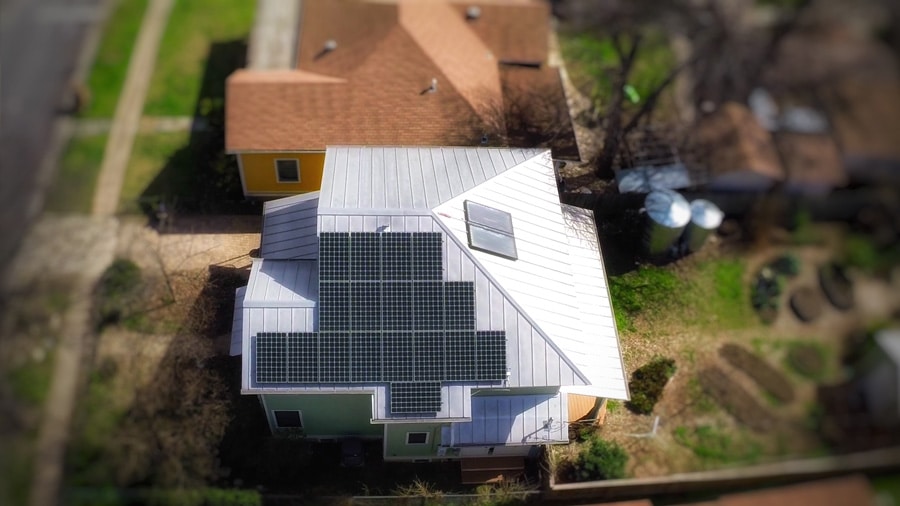
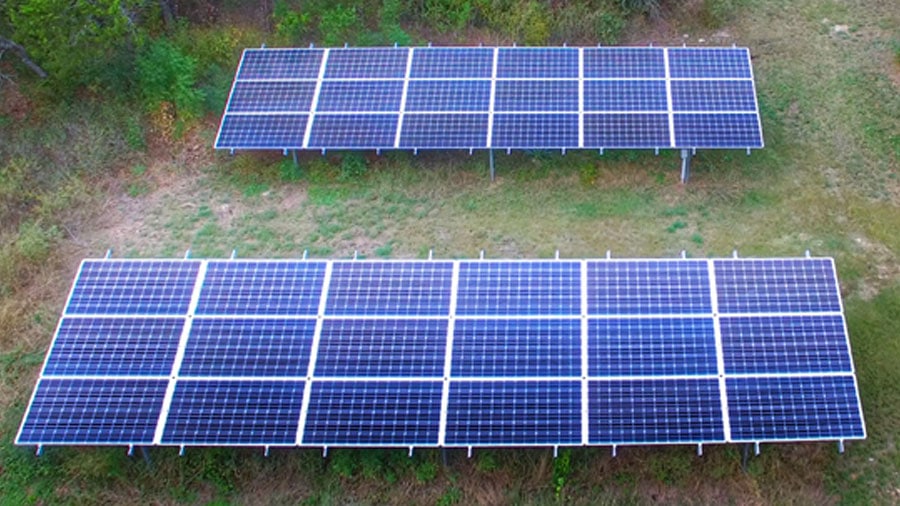
NATiVE Solar engineers every custom-home system from scratch, with the same rigor we apply to commercial projects. Design and engineering happen in-house, with PE-stamped designs where the project or jurisdiction requires them, and installation is done by NABCEP-credentialed staff and licensed electricians. That matters most on the houses other installers avoid: tile and standing-seam metal roofs, complex multi-plane rooflines, ground mounts on Hill Country acreage, and off-grid or hybrid systems for rural properties. We lay out arrays to respect the home’s elevations and place equipment where it’s serviceable, code-compliant, and out of sight. More on our custom residential solar + storage work.
How should a custom home plan battery storage for backup power?
Start with what has to keep running when the grid goes down, not with a battery model. We look at the home’s loads (HVAC, well pumps, medical equipment, refrigeration) and how long you want to ride through an outage. From there, the design is either critical-load backup or whole-home backup, sometimes with a generator integrated for extended outages. Smart electrical panels can manage loads automatically, stretching battery runtime. Placement matters too: residential battery systems carry fire-code and listing requirements that affect where they can go, which is easier to plan in the design phase than to fix later. Some utilities also offer battery programs, such as Austin Energy’s Power Partner incentive or virtual power plant programs, and eligibility varies by utility and program. A battery can also shift when the home draws from the grid, which may reduce exposure to time-of-use rates and rising electricity costs. We size for resilience first. More on battery energy storage.
Who handles custom engineering and long-term energy management for Texas homes?
NATiVE Solar designs custom-home systems with room to grow and stays involved after commissioning. That means choosing inverter capacity, panel space, and battery headroom so adding storage, an EV charger, or more generation later is a simple step, not a redesign. Our service team monitors systems, handles preventive maintenance and repairs, and manages detach-and-reset when a roof needs work. The same company that designs the system is the one you call years later.
Can you add solar or storage to an existing high-end home, or take over a system another company installed?
Yes. Battery additions to existing solar systems are routine work for NATiVE, including systems installed by companies that are no longer in business. One Austin homeowner came to us after his original installer disappeared mid-project; we reviewed the system, laid out options, and completed the battery add-on. Other Texas installers also refer complex residential projects to us when a job goes beyond what they take on.
It helps to know what separates a custom-home solar partner from a residential installer with a nice portfolio page. Here’s what we’d tell you to look for, whoever you end up hiring.
1. Involvement at the design stage, not after drywall
Ask when the firm wants to be brought in and what it delivers to the architect and builder: roof and structural input, conduit and prewire plans, equipment locations for the plan set. A partner who shows up after the walls close will cost you rework.
NATiVE starts from the plan set. As a company that began as a custom home builder, we coordinate with the GC and trades the way any other trade on the project would.
2. In-house engineering and real credentials
Ask who designs the system and who installs it. PE-stamped designs where required, NABCEP-credentialed staff, and licensed electricians on site are baseline signals.
NATiVE designs, engineers, and installs in-house.
3. Real battery design experience
Battery storage is where custom homes differ most from tract installs. Ask how the firm sizes backup (critical loads or whole home), whether it integrates generators and smart panels, and how it handles fire-code placement.
4. Permitting and utility experience in your area
Every utility handles interconnection and credits differently. Ask about experience with yours, whether that’s Austin Energy, Pedernales Electric Cooperative, Oncor, CenterPoint Energy, or CPS Energy.
5. Design integration and finish quality
Look at completed homes, not renderings. Array layout, conduit runs, and equipment placement show whether a firm designs for the house or just for the roof.
6. A warranty, and a company that will be around to honor it
Workmanship warranties vary widely, and a long one is only as good as the company behind it. Ask who handles service and how long they’ve been operating.
Every NATiVE installation carries a 10-year quality and workmanship warranty, plus manufacturer equipment warranties that typically run 15 to 25 years. We’ve been operating in Texas since 2007 and service what we build.
7. References from builders and architects
Homeowner reviews matter, but on a custom build, ask to speak with builders and architects who have worked with the firm, and look through its residential portfolio.
So why NATiVE Solar?
We’re not the only good option on this list, which is why we’ve named the others. But if you want a partner that started as a custom home builder, applies commercial-grade engineering to every home, brings a solar team whose combined experience spans more than 1,000 projects and 60MW, and is still here to service the system years later, that’s NATiVE Solar. Start the conversation early; it’s easier to design solar into a house than to fit it in afterward.
Where we work: NATiVE serves custom homes statewide, with local teams across Austin and the Hill Country, Dallas–Fort Worth, San Antonio, and Houston and the Gulf Coast. For commercial projects, see our guide to commercial solar companies in Texas.
How can a custom home use solar + storage to reduce exposure to outages and rising energy costs?
Solar + storage can keep a home’s critical loads running through grid outages and may reduce its exposure to rising and volatile electricity costs over time. How much depends on the home’s loads, its utility’s credit structure, and how the system is designed. NATiVE models your home’s expected loads and your utility’s rules before anything is built, so the system is sized for how you actually want it to perform. Eligibility for utility incentives varies by utility, program, and policy; the federal residential tax credit ended for systems completed after December 31, 2025.
Architects and builders: bring NATiVE in at the design stage.
More on Residential Solar + Battery Storage:

Austin Energy Announces New Residential Solar and Battery Backup Incentives
Austin Energy's 2026 Residential Solar Rebates, Value of Solar & Battery Incentives By Adam Glick, Solar Sherpa, NATiVE Solar Austin Energy Residential Solar Incentives, Explained (Summer 2026 Update)\ Austin Energy is actively expanding [...]

How Batteries Helped Stabilize the Texas Grid During the January Cold Snap
How Batteries Helped Stabilize the Texas Grid During the January Cold Snap By Adam Glick, Solar Sherpa, NATiVE Solar When a winter cold front swept across Texas this past January, and many of [...]

New Texas Solar Law (SB 1252) Makes It Easier for Homeowners to larger Install Solar + Battery Backup
New Texas Solar Law (SB 1252) Makes It Easier for Homeowners to Install Larger Solar + Battery Backup Without all the Red Tape. By Adam Glick, Solar Sherpa, NATiVE Solar If you’ve been [...]
