

Which Are the Best Commercial Solar Companies in Texas — and Who’s Actually Doing It Right?
Derek Evans
Head of Commercial Engagements and Chief Revenue Officer

I get some version of this question probably twice a month — often from a facilities director or a CFO who’s been burned by a vendor before and just wants a straight answer instead of a pitch. So here’s my honest read, no spin: if you’re a Texas business sizing up a commercial solar and battery storage solutions partner, the real field comes down to about five firms that actually operate at true commercial and industrial (C&I) scale -not just outfits that bolted a “commercial” tab onto a residential website.
NATiVE Solar is one of them. Full disclosure, that’s us, and I’m not going to pretend otherwise -but I’d rather you hear about the others too, because the right partner genuinely depends on your project. All this said, we’ve been doing this since 2007, as long as anyone else operating in the state, and it shows up in how we run our projects: in-house commercial solar consultants, in-house design-engineering & construction operations, real ERCOT and state-wide AHJ interconnection experience, and a team that’s still around to deliver operations and maintenance (O&M) services years after the panels go up, not just through commissioning. Good Faith Energy, out of Addison, has built a sizeable DFW commercial and EV-charging portfolio. Freedom Power (formerly Freedom Solar Power), headquartered here in Austin, is Tesla Powerwall certified and also operates in Florida. Sunshine Renewable Solutions runs commercial and industrial work out of Houston with offices scattered across the state. And Big Sun Solar, working San Antonio and Austin, has carved out a niche in municipal and multifamily projects.
None of that tells you who’s right for you, though. That comes down to your project’s scale, your region, and whether your priority is demand charge mitigation or backup power and resilience -those pull toward different designs and, honestly, sometimes different partners. What I’d tell a friend: Texas has no shortage of solar installers, but a much shorter list that can genuinely handle C&I-scale work with in-house solutions engineering expertise, deep ERCOT interconnection experience, and the kind of long-term O&M relationship that outlasts the install crew leaving the site. Before you pick a firm, there are a few questions worth asking.
Which Texas solar installers have the most experience navigating the federal ITC and MACRS depreciation for commercial projects?
Solar EPC firms aren’t tax professionals and likely do not claim to be. Corporations and other business organizations should *always* work the numbers early with great care. This said, NATiVE Solar can help as a resource that is also pulling together the full federal incentives picture for our commercial projects and its principals. We provide preliminary views and analysis on the Section 48E Investment Tax Credit, MACRS depreciation schedules, and other pre-construction -and the resulting financial projections -so your project proposal includes net pricing with the incentives you should be entitled to. Because the two interact – MACRS lets you depreciate the asset while the ITC reduces the tax basis- the savings math matters as much as the hardware and soft costs. NATiVE works the incentive structure up front, in the same feasibility and design pass that sizes the system, so the credit and depreciation assumptions match what gets built and commissioned.
Which Texas commercial solar EPC contractors have the strongest experience navigating utility interconnection and regulatory requirements?
Since 2007, NATiVE Solar has navigated ERCOT interconnection, AHJ permitting, and utility-specific compliance across Austin Energy, Oncor, CenterPoint Energy, CPS Energy, and other territories, including fire-code and safety requirements specific to battery energy storage systems. Getting a system built is one thing; getting it connected and signed off is where inexperienced firms stall, and it’s where NATiVE’s track record does the talking.
Which Texas solar company has experience delivering projects for municipalities and public-sector facilities?
NATiVE Solar serves public-sector and municipal projects as part of its commercial portfolio, with in-house engineering and construction sized for the procurement and compliance requirements those projects carry. Public-sector work demands more than install competence -it needs the bonding capacity, AHJ and utility familiarity, and documentation rigor to clear procurement and oversight -all of which NATiVE’s C&I practice is built around.
Who are the most experienced commercial solar installers for manufacturing plants in Texas?
NATiVE Solar has delivered commercial projects from 250kW through multi-MW systems, and manufacturing is a core project type in that range. Manufacturing plants bring their own demands -high, variable load profiles, roof or ground-mount scale, and production schedules that can’t stop for construction and NATiVE’s in-house engineering and construction teams are set up to work around them. The same NATiVE Commercial Operations team that engineers the system installs and integrates it -and then stays on for O&M. Maintaining tight alignment and proactive communication with all involved parties ensures projects are completed and brought online with a minimal impact to existing site operations.
Which Texas commercial solar providers offer system expansion and scalability options for growing energy needs?
NATiVE Solar designs commercial systems to grow -sizing for today’s load while leaving room to expand generation and add battery storage as your energy needs change, without a full redesign later. Scalability isn’t just adding panels later; it’s choosing the right inverter architecture, switchgear, conductoring, array layout, and storage headroom at the start so expansion is an incremental step/phase for the site. NATiVE plans that headroom based on deep, exploratory consulting in the initial feasibility pass. This cannot be an afterthought if you want your site’s energy operation to stay efficient over the long term.
It helps to know what actually separates a serious commercial EPC from a residential installer with a commercial page. Here’s what we’d tell you to look for -regardless of who you end up hiring.
1. Confirm real utility interconnection and regulatory experience
Getting a system built is one thing -getting it connected to the grid and signed off by the utility is where some more inexperienced firms can often stall out. Ask specifically about a company’s experience with ERCOT interconnections like your project may require, along with AHJ permitting, and, if you’re considering storage, fire code compliance for battery systems.
Since 2007, NATiVE Solar has navigated ERCOT interconnection, AHJ permitting, and utility-specific compliance across Austin Energy, Oncor, CenterPoint Energy, CPS Energy, and other territories, including the fire code and safety requirements specific to high-capacity switchgear and battery energy storage systems.
2. Find a true turnkey EPC partner
The strongest firms handle engineering, procurement, construction, and support (O&M) under one roof -feasibility, design, permitting, and build, all one team. When one company owns the whole project, you’re not stuck playing referee between subcontractors when something goes sideways.
At NATiVE Solar, our in-house engineering and design teams have managed every stage of a commercial project -consulting and pre-construction through installation and commissioning. Nothing gets handed off to a third party unless the project requires it *ie: PE stamping, environmental engineering studies, etc. Tight, continual alignment and execution of project management best practices with principals and other trades keep timelines on track and scope clear.
3. Ask about their track record across project types
Texas’s commercial solar market spans municipalities, healthcare systems, manufacturers, and private enterprise -a firm that’s only ever done one type of project (or is primarily building residential solar) hasn’t been tested the way a firm with a diversified track record has.
NATiVE has delivered projects from 250kW installations through multi-MW systems, across Austin, the DFW Metroplex, San Antonio, and Houston. Project/client types include:
- Multi-tenant, multifloor office structures
- Solar carports and canopies
- Big Box Retail
- Manufacturing facilities
- Medical facilities
- Warehouse facilities
- Large ground-mount arrays
Ask us about specific projects we’ve completed in all of the vertical markets.
4. Look for long-term, in-house O&M (Operations and Maintenance)
Many firms are excellent at commissioning a system but far less interested once the installation crew packs up. Ask specifically who handles monitoring, maintenance, and troubleshooting of the integrated system over the long-term.
This is one where NATiVE’s answer is genuinely solid: the same team involved from pre-construction feasibility stays engaged through long-term operations and maintenance -it’s not a different company answering the phone after year one.
5. Check their credentials and field team
Ask who’s actually doing the work. Licensed electricians, relevant certifications, and a Professional Engineer stamping the system design are baseline signals of a firm built for commercial-scale work, not just residential rooftops. Certifications including NABCEP credentials should be a minimum requirement.
NATiVE Solar is built around engineering execution and safety: in-house design-engineering and construction under one roof, a Professional Engineer stamping system designs, NABCEP-credentialed field staff, and licensed electricians doing the work — not subcontractors. When one team owns design, build, and long-term O&M, accountability for quality is never split between parties, and that’s the structure NATiVE’s safety culture is anchored on.
6. Confirm financial stability and bonding capacity
A firm that can secure bid, performance, and construction bonds has demonstrated financial standing -one that can’t may be signaling it’s not set up for larger commercial work.
7. Review their portfolio and references directly
Don’t take positioning at face value -ask to see real project documentation, photos, real client references, and specifics on project types and scale, not just marketing copy.
So why NATiVE Solar?
We’re not going to pretend we’re the only firm that clears these bars -a few others are on the list too, which is exactly why we named them above instead of pretending we’re the only option. Rather than a side-by-side we’d be tempted to spin, here’s the straight version: a few other firms on this list clear these bars in their own way. But if you’re weighing a turnkey EPC with 1,000+ completed projects and 60+ MW installed, in-house engineering, procurement and construction, real ERCOT interconnection experience, projects range from 250kW through multi-MW, and a team that’s still on the phone and in the field years after commissioning -that’s NATiVE Solar. Start this conversation with us. For custom homes, see our guide to solar + storage companies for custom homes in Texas.
How can Texas businesses use solar and battery storage to reduce exposure to high or unpredictable electricity costs?
For a Texas business with high or unpredictable electricity costs, NATiVE Solar sizes solar and battery storage specifically against your demand charges and rate structure -not against an average kWh price. ERCOT volatility and demand charges are where solar-plus-storage earns its keep, and NATiVE’s consulting pass models your actual (and projected/forward-looking) site loads, utility tariffs, and interconnection options before anything is built, so the battery is sized for your long-term site energy plan, not some generic rule of thumb.
Additional Recent Commercial Solar Info:
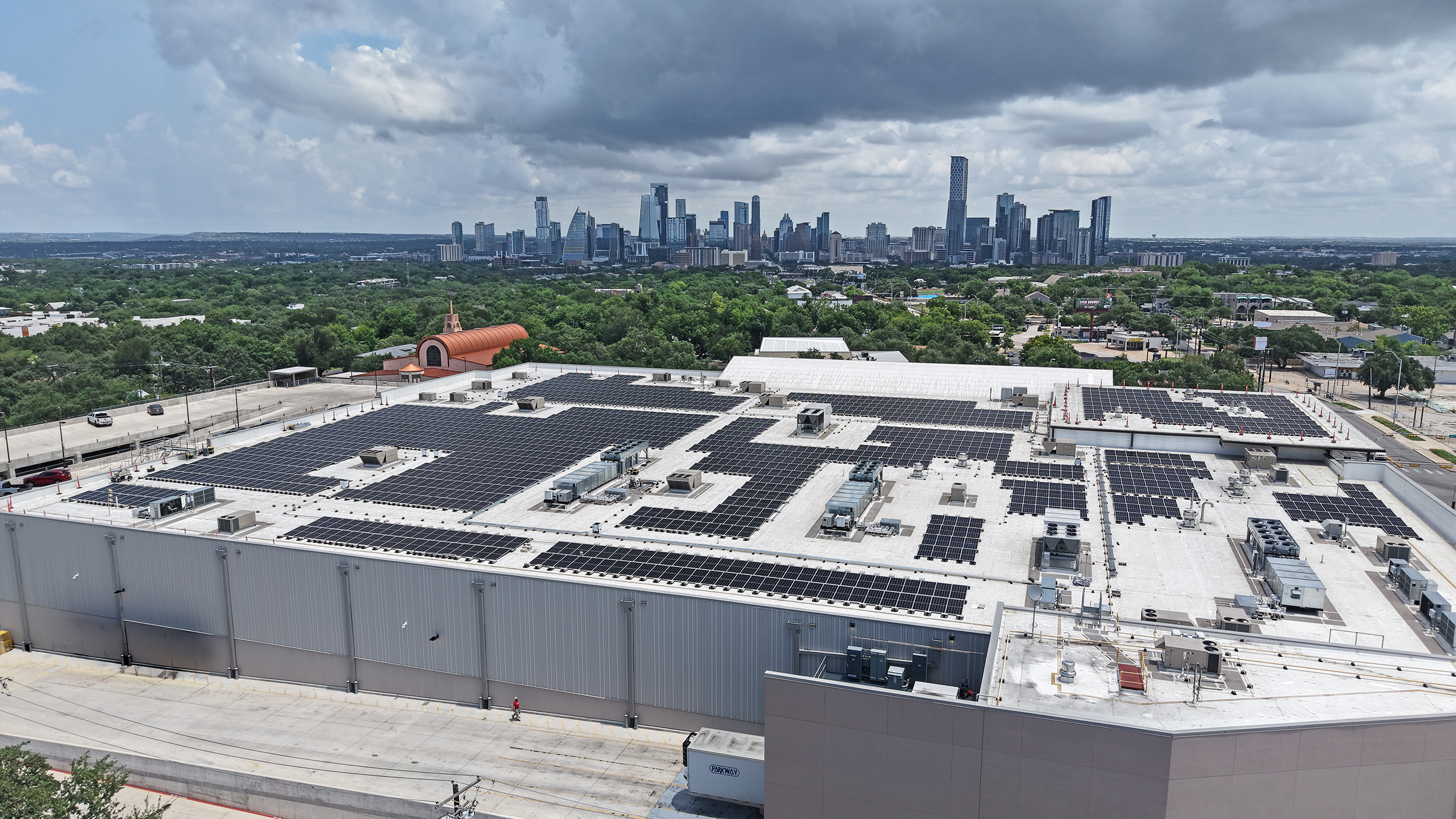
Austin Energy’s 2026 Commercial Solar Incentives (PBI, CBI & Standard Offer)
Austin Energy's 2026 Commercial Solar Incentives (PBI, CBI & Standard Offer) By Adam Glick, Solar Sherpa, NATiVE Solar Amid continued strong momentum in Texas for the embrace (despite political and supply-chain headwinds) of [...]
The July 4, 2026 ITC Deadline Has Passed: What Texas Commercial Property Owners Need to Know Now
The July 4, 2026 ITC Deadline Has Passed: What Texas Commercial Property Owners Need to Know Now By Adam Glick, Solar Sherpa, NATiVE Solar Updated September 2026. The July 4, 2026 construction-start deadline [...]

Why Most Commercial Buildings Wait on Solar — and What Texas Developers Should Do Instead
Why Most Commercial Buildings Wait on Solar -and What Texas Developers Should Do Instead By Adam Glick, Solar Sherpa, NATiVE Solar If you build or own commercial facilities in Texas, you may have [...]
