Sunnova’s Residential Exit: What It Means—and Why NATiVE Isn’t Going Anywhere Sunnova’s Residential Exit: What It Means—and Why NATiVE Isn’t Going Anywhere Sunnova’s Residential Exit: What It Means—and Why NATiVE Isn’t Going Anywhere By NATiVE Solar|2025-08-20T10:09:00-06:00June 12th, 2025|Batteries, Commercial Solar, Community Involvement, Green Building, Legal, Maintenance, Press, Regulatory, Residential Solar, Service, Solar Industry, Texas Grid, Texas jobs, Texas Solar Policy| Read More 0
Texas Legislature Rejects Anti-Renewable Bills: What It Means for Solar Texas Legislature Rejects Anti-Renewable Bills: What It Means for Solar Texas Legislature Rejects Anti-Renewable Bills: What It Means for Solar By NATiVE Solar|2025-06-14T09:13:39-06:00June 4th, 2025|Energy Storage, Legal, News, Permitting, Politics, Regulatory, Residential Solar, Tax Credits, Texas Grid, Texas jobs, Texas Solar Policy| Read More 0
Houston’s Big Energy Makeover Houston’s Big Energy Makeover Houston’s Big Energy Makeover By NATiVE Solar|2025-01-23T11:13:56-06:00January 7th, 2025|Blog, climate change, Solar, Solar Industry, Texas Grid, Texas jobs, Texas Solar Policy| Read More 0
The Economic Benefits of Installing Solar Panels in Texas Homes and Businesses The Economic Benefits of Installing Solar Panels in Texas Homes and Businesses The Economic Benefits of Installing Solar Panels in Texas Homes and Businesses By NATiVE Solar|2024-04-22T08:00:00-06:00April 22nd, 2024|Blog, Commercial Solar, Residential Solar, Solar, Texas jobs| Read More 1
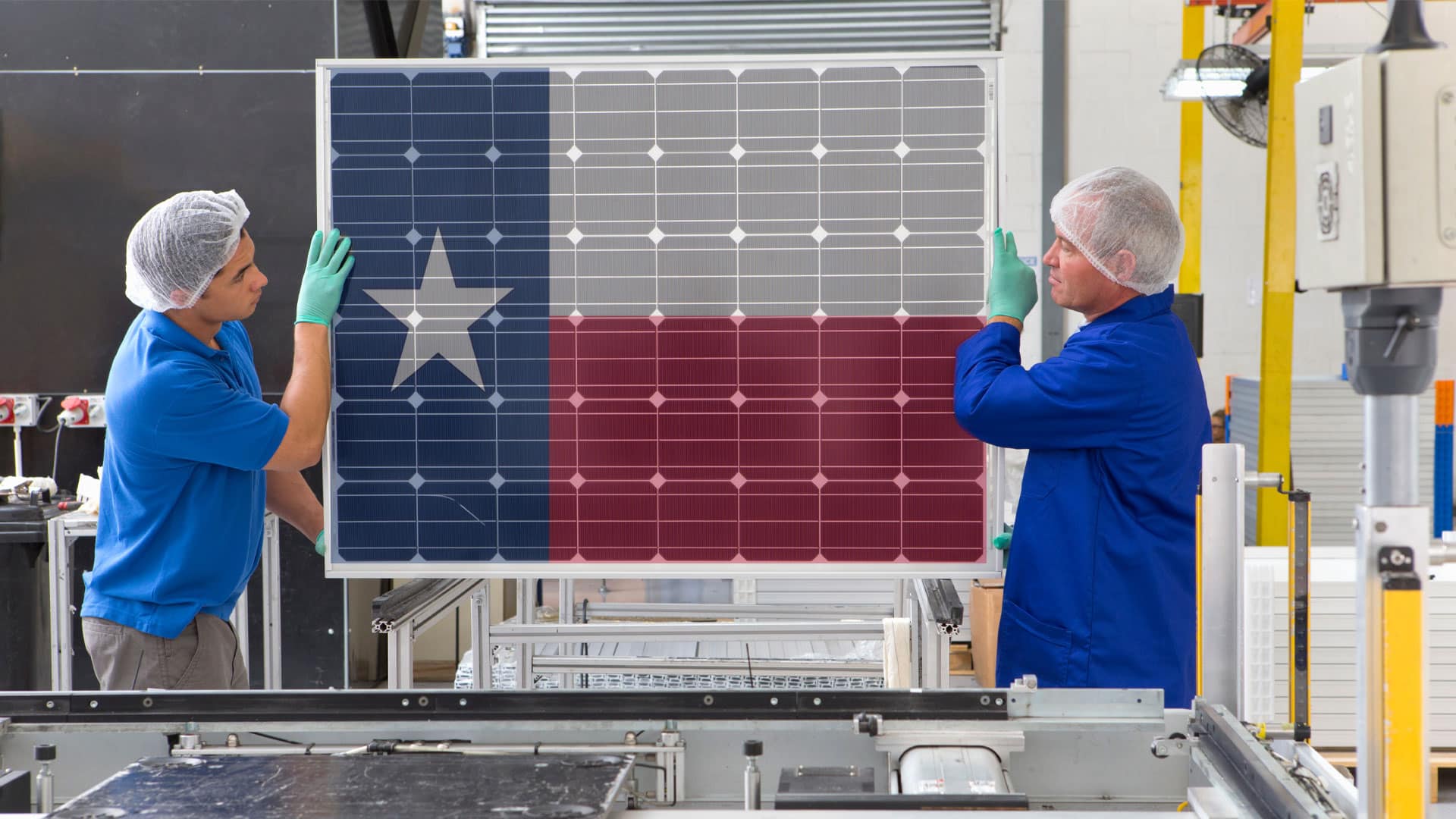
Texas Solar Manufacturing Texas Solar Manufacturing Texas Solar Manufacturing By NATiVE Solar|2024-01-30T08:29:57-06:00January 30th, 2024|Blog, Domestic Manufacturing, Solar, Texas jobs, Texas Solar Policy| Read More 0
Renewable Energy Manufacturing in Texas Renewable Energy Manufacturing in Texas Renewable Energy Manufacturing in Texas By NATiVE Solar|2025-04-15T14:20:35-06:00September 11th, 2023|Blog, Domestic Manufacturing, Solar, Texas jobs| Read More 0